
Luxury vinyl tile, or LVT, is the flooring behind a lot of convincing wood and stone looks that turn out not to be wood or stone at all. It layers a printed image under a clear protective coat, then backs it with vinyl for stability underfoot.
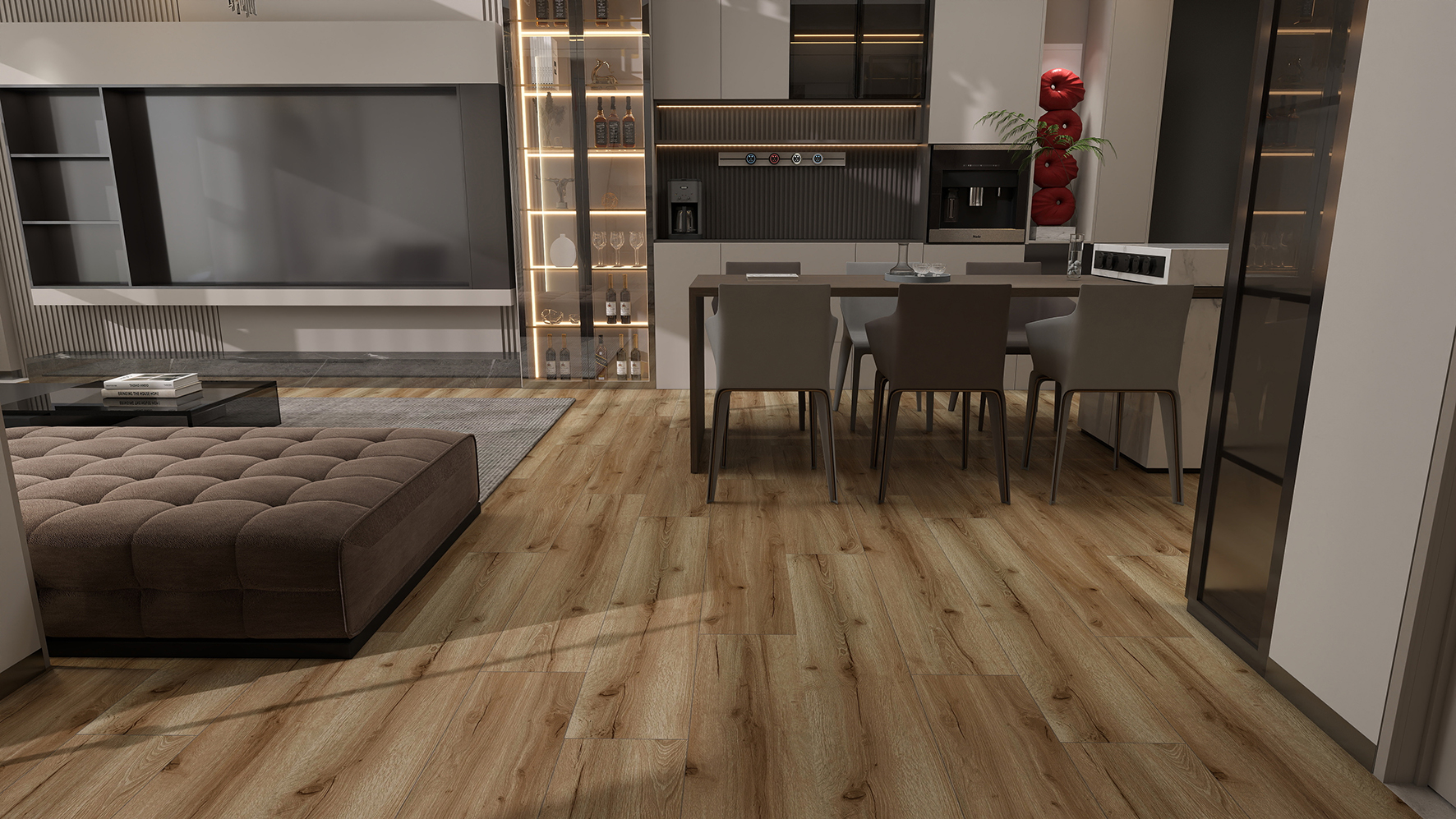
How an LVT plank is built
LVT is a layered product. From the bottom up, most planks follow the same logic: a backing layer for support, a core that gives the plank its body, a decorative print film that carries the wood or stone image, and a transparent wear layer on top that takes the daily abuse. Better ranges add a coating over the wear layer for extra scratch and stain resistance.
The print layer is a high-resolution photograph. That is why a good LVT floor can mimic oak grain, travertine, or weathered concrete closely enough that people crouch down to check. Wear layer thickness, usually measured in mils or microns, is the single biggest factor in how long the surface holds up.
Flexible LVT versus rigid LVT
Traditional LVT is flexible — you can bow a plank slightly in your hands. It is thinner, quieter underfoot, and often glued down. Because it bends, it also telegraphs whatever is beneath it, so the subfloor has to be very smooth or every dip eventually shows through.
Rigid LVT swaps the flexible core for a solid one, which is where SPC (stone plastic composite) and WPC (wood plastic composite) come in. These click together as floating floors and hide minor subfloor flaws. When a shop says 'rigid LVT', they almost always mean SPC or WPC.
| Layer | Job it does |
|---|---|
| Wear layer | Resists scratches, scuffs and stains |
| Decorative film | Carries the printed wood or stone look |
| Core | Gives the plank stability and thickness |
| Backing | Adds support and some acoustic cushioning |
Is LVT waterproof?
This is where the type matters. The vinyl material itself does not absorb water, so most LVT handles spills and damp mopping without trouble. Rigid LVT with an SPC or WPC core is genuinely waterproof through the plank, which is why it ends up in kitchens, laundries, and bathrooms. Glue-down flexible LVT resists surface water but relies on tight seams and a sound subfloor, so standing water can still work its way underneath.
Where LVT works best
LVT suits busy homes and light commercial spaces — hallways, kitchens, offices, retail — where people want the look of timber or stone without the cost, cold, or upkeep. It is warmer and softer than ceramic, forgiving of dropped plates, and simple to clean. In heavy commercial traffic, the wear layer and its rating become the deciding spec.
MILAT manufactures both SPC and LVT flooring in Gaziantep, with an embossed-in-register surface so the texture you feel lines up with the grain you see. That register between print and emboss is a small detail that separates a realistic floor from a plasticky one.
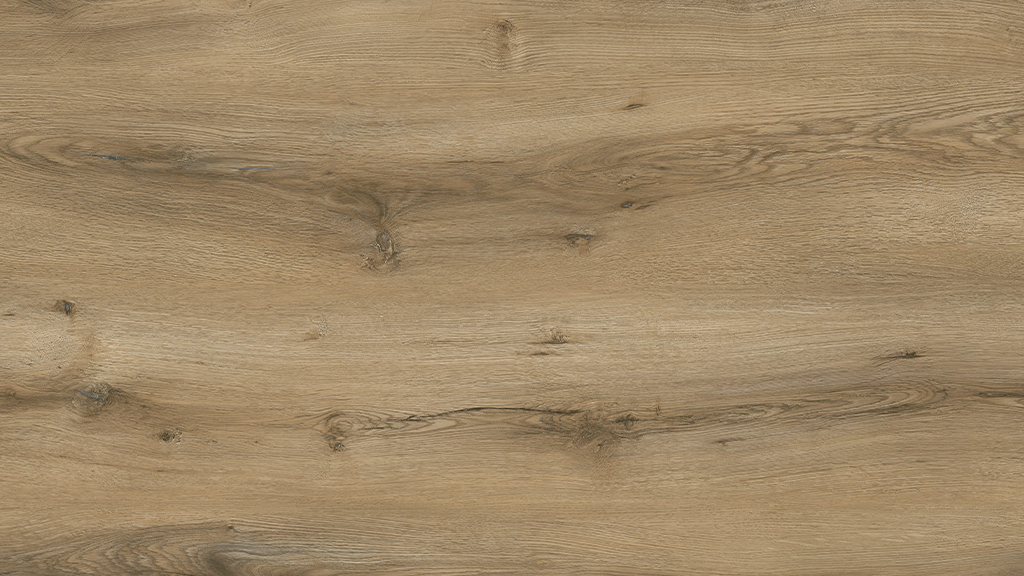
How the wood look actually gets there
The decor on an LVT plank starts as a high-resolution scan of real timber or stone, printed onto a film that sits just beneath the clear wear layer. Two things separate convincing from cartoonish. First, the number of unique printed variants: a good collection prints many different plank faces so the same knot does not march across your floor in a visible repeat. Second, texture. Basic products emboss a generic woodgrain tick that ignores the picture beneath it. Premium boards use EIR, Embossed In Register, where the press texture is aligned with the printed grain so your fingers feel the knot your eyes see. All MILAT collections are EIR for exactly this reason; under raking light it is the difference between flooring and photography.
Glue-down or click: how to decide
LVT comes in two installation families and the right one depends on the job, not on fashion. Click floors float, go down fast over existing hard floors, and come up again cleanly, which suits residential rooms, refurbishments and anywhere downtime is expensive. Glue-down uses thinner flexible planks bonded fully to the subfloor; it handles heavy rolling loads, suits very large uninterrupted areas, and puts the floor feel closer to the slab, but it demands near-perfect subfloor prep and makes replacement a scraping job. For most homes and phased commercial fit-outs the click format wins on speed and reversibility. For a supermarket aisle with cage trolleys running all day, glue-down still earns its keep.
Reading wear layers like a professional
The wear layer, the clear coat above the print, is the single spec that best predicts how an LVT floor ages. Thicker layers survive grit, chair legs and traffic longer before the decor is exposed. Residential rooms get by with lighter layers; commercial corridors, shops and hotels demand heavier ones, expressed in ratings up to AC5 for intense commercial use. The coating on top matters as much as the thickness: MILAT applies a 2X UV coating that resists scuffing and the slow gloss-change cheap floors show in traffic lanes. When two products look identical on a sample, the wear layer and its coating are usually where the price difference lives.
How LVT grew up
Vinyl flooring spent decades as sheet goods and stick-down tiles with a budget reputation. The category changed in the 2000s and 2010s as digital printing sharpened the visuals and click systems borrowed from laminate made vinyl a floating floor. Rigid mineral cores then solved flexible vinyl's telegraphing problem, and the modern LVT and SPC family took a large share of the wood-look market from laminate in the process. Knowing this history helps a buyer decode the shelf: older-style flexible product, click LVT and rigid SPC all sell under the same luxury vinyl banner, at very different performance levels.
Judging quality when every sample looks good
- Ask for the wear layer thickness and rating in writing, not just the word commercial
- Check the texture: EIR aligned with the grain signals a premium press, generic embossing does not
- Flex a corner of a click sample; the locking profile should be cleanly milled, not crumbly
- Look for FloorScore certification for indoor air quality and a CE Declaration of Performance
- Count distinct plank designs in the collection; more unique faces mean fewer visible repeats
- Smell the sample; a strong chemical odour is a crude but honest screen for low-grade plasticisers
Talk to MILAT Floor
Samples, specifications, OEM & private label, wholesale or export — our team is ready.