
Vinyl Composition Tile and Luxury Vinyl Tile share three letters and almost nothing else. One is a porous, wax-dependent tile that has held down school and hospital corridors for decades. The other is a printed, layered plank built to imitate oak or stone and shrug off spills. Here is how they actually differ, and where each still earns its place.
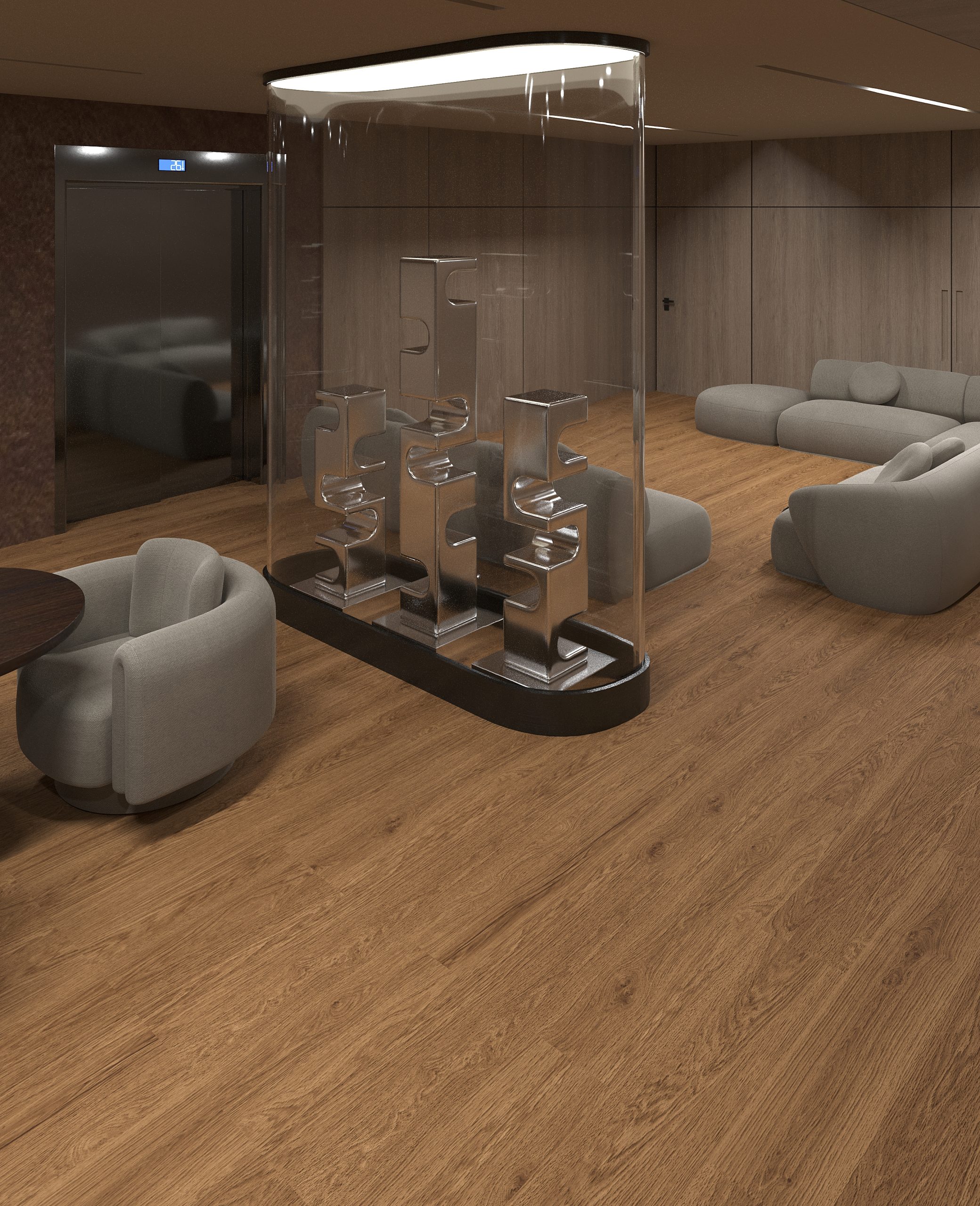
What each tile is made of
VCT is roughly 85% limestone bound with a small share of vinyl and colour pigment, then pressed into hard, thin tiles. That mineral content makes it cheap and rigid, but also porous: the tile drinks in liquid and dirt unless it is sealed and kept sealed.
LVT is a multi-layer sheet of PVC with a printed film that carries the wood or stone image, protected by a clear wear layer on top. Better LVT is built on a rigid SPC core, which is where a floor stops being simply water-resistant and becomes properly waterproof.
Maintenance and waxing
This is the real dividing line. VCT has no built-in protective layer, so it has to be stripped, sealed and waxed after installation and then re-coated on a schedule for the rest of its life. Skip the routine and the tile dulls, stains and wears through. LVT ships with a factory wear layer, often UV-cured, so day-to-day care is a sweep and a damp mop. You never wax it.
Water and moisture
VCT is porous and its many seams give water a path straight to the subfloor, which rules it out for bathrooms, entrances and anywhere prone to standing water. A quality LVT plank on a waterproof SPC core, such as MILAT builds in Gaziantep, keeps water on the surface and locks tightly at the joints.
Look, cost and where they land
| Feature | VCT | LVT |
|---|---|---|
| Core | Limestone plus vinyl binder, porous | Layered PVC, often on rigid SPC |
| Waterproof | No, seams absorb water | Yes on a quality rigid core |
| Waxing | Strip and re-wax on a schedule | None, factory wear layer |
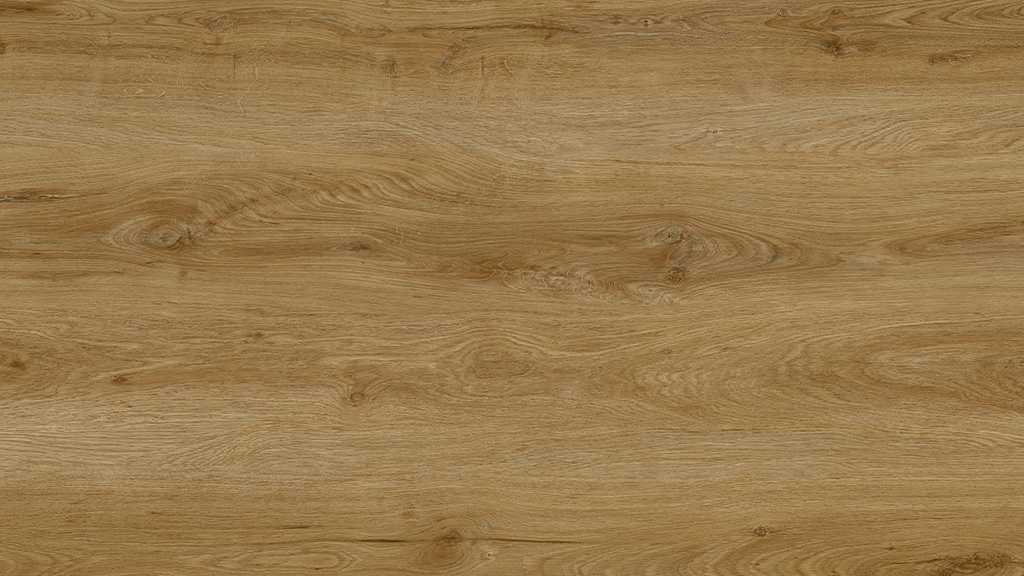
| Look | Solid speckled colours | Realistic wood and stone with EIR |
| Best fit | Budget institutional floors | Retail, hospitality and homes |
VCT often wins on the tile price alone. Add years of stripping, sealing, wax and the labour to apply it, and the total cost of ownership tends to swing toward LVT. For commercial spaces that want a wood or stone look without a floor-care crew, an AC5-rated LVT plank is usually the more honest long-term choice.
So which one
Choose VCT only where the budget is tight, the look does not matter, and there is a team on hand to keep waxing it. Choose LVT when you want realism, waterproofing and low upkeep, which covers most retail, hospitality and residential projects today.
Replacing old VCT: read this before you rip it up
Many buyers comparing VCT and LVT are really standing on an ageing VCT floor deciding what to do with it. One caution comes first: vinyl composition tiles and their adhesives from older buildings can contain asbestos. Never sand, grind or dry-scrape an old resilient floor of unknown age; have it tested, and if needed, removed by licensed professionals or safely encapsulated. In many cases the practical route is to leave sound old tile in place, level it, and float a new rigid click floor over the top without disturbing anything.
The labour equation nobody puts on the quote
VCT looks economical on the material line and expensive everywhere else. Its whole appearance depends on a maintenance cycle: stripping old finish, applying fresh coats, and burnishing on a schedule, all of it labour, chemicals and closed floors. LVT and SPC need routine cleaning only, with no finish layer to strip or rebuild. Facility managers who switch describe the difference less as a flooring change and more as deleting a recurring line from the maintenance budget. Over the life of the floor, the polish bucket costs more than the tile did.
Downtime is a cost too
A shop, clinic or school corridor earns nothing while its floor is being worked on. VCT's glue-down installation needs adhesive open time, and its periodic recoating closes areas overnight or longer, again and again for decades. A click-locked rigid floor floats into place with no adhesive cure, sections can open to traffic as they are completed, and there is no recurring finish work to schedule around. For businesses that cannot close, this is frequently the argument that ends the comparison, independent of any material quality discussion.
Comfort, acoustics and the people on the floor
VCT over concrete is hard and loud; heels click, trolleys rattle and staff who stand all day feel the slab through their shoes. Modern LVT and SPC builds carry some give in the structure, and MILAT's SPC adds an attached IXPE acoustic layer with sound absorption up to 21 dB, which softens footfall for the floor below and the room itself. In care homes, classrooms and offices, that acoustic difference is noticed by people who could not name the flooring type, which is usually the sign of a spec worth paying for.
Appearance over the years, not the first month
Fresh VCT with new polish and fresh LVT look equally smart. The divergence comes later. VCT's look lives in its sacrificial finish: let the schedule slip and traffic lanes go grey within months, and the tile body itself is a uniform speckle that dates a space. LVT carries its design under a transparent wear layer, so the wood or stone visual survives traffic without any coating regime, and EIR texture keeps it convincing up close. Ten years in, the difference between the two floors is not subtle.
Talk to MILAT Floor
Samples, specifications, OEM & private label, wholesale or export — our team is ready.