
Ceramic tile is the traditional wet-wall finish: small fired units set in tile adhesive and grouted. An SPC wall panel is a 3–5 mm sheet of stone-polymer composite, 960 × 2800 mm, bonded to the wall with an MS polymer adhesive. Both resist water at the surface. The practical differences are the number of joints, the time on site and the upkeep — and there are still walls where tile is the better answer.
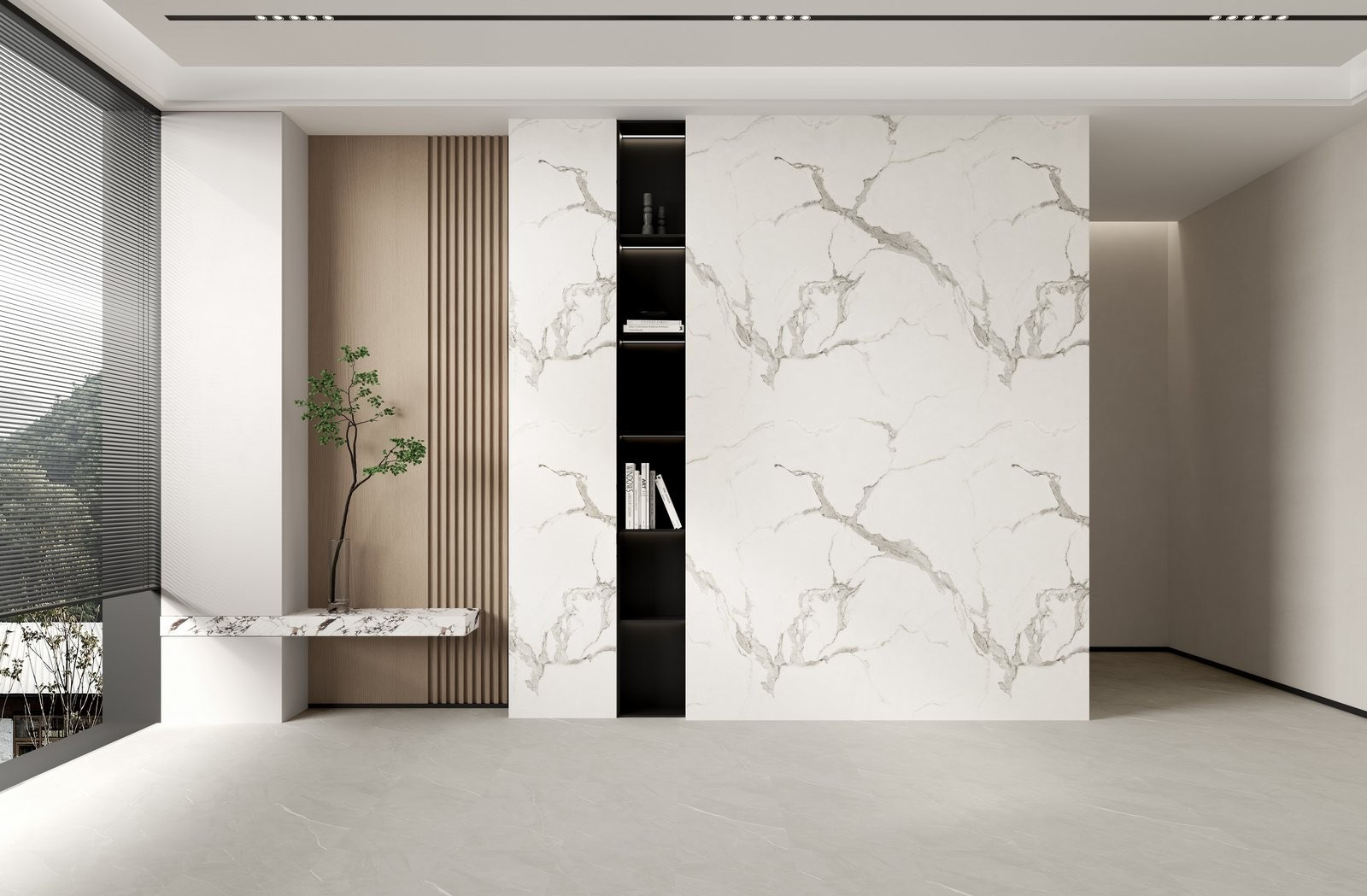
Side by side
| SPC wall panel | Ceramic tile | |
|---|---|---|
| Unit size | 960 × 2800 mm panel (also 580 × 950 mm TG click) | Small units, many per wall |
| Joints | A few vertical joints, no grout | A grid of grout lines |
| Fixing | Solvent-free MS polymer adhesive on the back of the panel | Tile adhesive bed, then grout |
| Time on site | Hours — no curing stages between steps | Days — adhesive and grout each need to cure |
| Cutting | Utility knife or jigsaw | Tile cutter or wet saw |
| Thickness | 3–5 mm | Thicker and heavier per square metre |
| Upkeep | Wipe clean; nothing to re-seal | Grout needs cleaning and periodic attention |
| Fire behaviour | Bfl-s1 (EN 13501-1) | Non-combustible |
| Curved or very uneven walls | Needs a flat wall | Small formats follow curves and falls |
Grout is the real difference
Most of what people dislike about a tiled bathroom is the grout, not the tile: cement-based grout is porous, it darkens, and it is where mould takes hold first. A panel wall replaces a grid of grout lines with a handful of panel joints. That is the main reason panels are quicker to clean and keep their look for longer.
Time and trades
Tiling is a sequence of wet stages — prepare, set, wait, grout, wait. Panelling is mostly preparation: once the wall is dry, sound and level and the panels have acclimatised for 48 hours, they are glued, cut to fit and wiped down. For a hotel or a rental refurbishment the difference is a room out of service for an afternoon rather than several days.
Where ceramic tile is still the better choice
- Surfaces exposed to direct heat. Ceramic is non-combustible; next to an open flame or a very hot appliance, follow the appliance maker's clearances and choose tile where they call for a non-combustible finish.
- Curved walls, shower floors with falls and other shapes a large rigid panel cannot follow.
- Walls that cannot be made flat. A rigid panel bridges small dips but not humps; small tiles tolerate more.
- Projects that need a specific fired-ceramic texture or a traditional tiled look.
Where the panel wins
- Refurbishments on a deadline — bathrooms, hotel rooms, rental turnarounds.
- Large, calm surfaces: marble and concrete looks without a tile grid cutting across the veining.
- Low-maintenance walls in kitchens, utility rooms and commercial washrooms.
- Rooms where floor and wall should match: sixteen MILAT flooring designs are also produced as wall panels.
Cost
A fair comparison counts the whole wall, not the material alone: panel or tile, adhesive, grout and sealant, labour, and the days the room is out of use. Panel prices depend on format, decor, quantity and delivery terms and are quoted in writing; ask for the specification sheet and samples with the quote.
Sources & references
Talk to MILAT Floor
Samples, specifications, OEM & private label, wholesale or export — our team is ready.
MILAT Floor is an SPC flooring manufacturer with its own factory in Gaziantep, Türkiye — buy manufacturer-direct.