
Put an SPC plank, a WPC plank and a flexible LVT tile side by side and most people cannot tell them apart. Lay them in a busy kitchen for two years and the differences become obvious. All three are vinyl-based and print convincing wood and stone looks, but their cores are built for different priorities: hardness, softness, or a thin flexible format. Here is how they compare and how to choose.
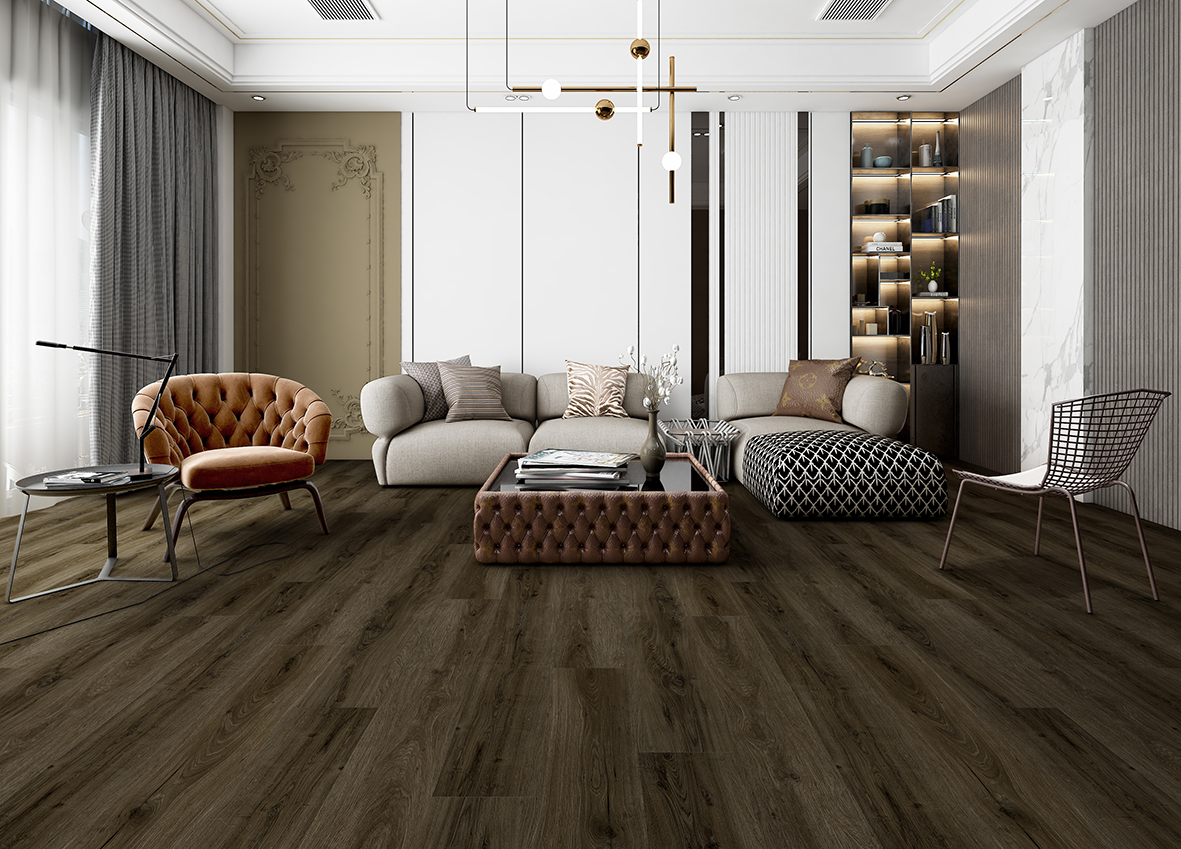
What each one actually is
SPC is stone plastic composite — a dense, rigid core of limestone and PVC. It is hard underfoot, dimensionally stable, and waterproof through its thickness. WPC is wood plastic composite, where the PVC is foamed with a wood-flour filler to create a lighter, slightly softer rigid core; it is also waterproof and tends to feel warmer and cushioned. Flexible LVT (luxury vinyl tile) has no rigid core at all: it is a thin, bendable vinyl plank or tile, usually glued or loose-laid, prized for its slim profile and comfort but water-resistant rather than fully waterproof.
| Feature | SPC | WPC | Flexible LVT |
|---|---|---|---|
| Core | Rigid stone-polymer (limestone + PVC) | Rigid foamed wood-polymer | Thin flexible vinyl, no rigid core |
| Waterproof | Fully waterproof | Fully waterproof | Water-resistant only |
| Feel underfoot | Firm, solid | Softer, warmer, cushioned | Thin, flat, follows subfloor |
| Dent resistance | High (dense core) | Moderate (foamed core) | Lower, shows subfloor flaws |
| Installation | Click, floating | Click, floating | Usually glue-down or loose-lay |
| Best rooms | Kitchens, halls, commercial, wet areas | Living rooms, bedrooms | Low-traffic rooms, thin build-ups |
| Subfloor tolerance | Hides minor imperfections | Hides minor imperfections | Needs a very flat, sound subfloor |
Waterproof is not the same as water-resistant
This is the line that trips buyers up. SPC and WPC have rigid cores that do not absorb water, so a spill sitting overnight will not swell them from within — they are genuinely waterproof. Flexible LVT resists surface moisture but its thin construction and glued seams make it water-resistant, not waterproof; standing water can eventually work into the adhesive and edges. For bathrooms, kitchens, laundries and entryways, a rigid SPC or WPC core is the safer specification.
Choosing by priority
- Toughness and traffic first: choose SPC. The dense core resists dents from furniture legs and heels, and it handles commercial footfall. MILAT SPC reaches AC5 wear on its Triollo EIR collection.
- Comfort and warmth first: consider WPC. The foamed core gives a little more give and feels warmer to bare feet, which suits living rooms and bedrooms.
- Slim profile or tight transitions first: flexible LVT fits where every millimetre counts, but accept that it needs a near-perfect subfloor and offers only water resistance.
- Wet or high-humidity rooms: SPC, for full waterproofing and stability in temperature swings.
Where MILAT fits
MILAT manufactures rigid SPC and LVT flooring in Gaziantep with a 100% waterproof SPC core, EIR surface, licensed Unilin click and IXPE acoustic backing up to 21 dB. That combination gives you the hardness and waterproofing of SPC with a click system that installs floating and fast. For projects that want a softer feel in bedrooms and living spaces, the collections and custom options can be matched to the room.
Not sure which core suits your rooms or your project spec? Send your room list and traffic levels to sales@milatfloor.com, or call +90 535 960 79 46, and we will point you to the right build.
Temperature swings and dimensional stability
Water gets the headlines, but heat moves floors more often. A room with big glazing, a conservatory, or a home left unheated between visits will cycle a floor through temperature swings that flexible vinyl and lighter cores feel keenly. SPC's high mineral content gives it the lowest expansion of the three, which is why it is the default answer for sunrooms, south-facing rooms and holiday properties. WPC sits in the middle, and flexible LVT depends on its adhesive to hold it steady, meaning the glue bond, not the plank, is what the heat actually tests. Match the core to the room's worst week of the year, not its average day.
Repairing damage: plank by plank
Accidents happen to all three, so ask how each is fixed. A floating SPC or WPC floor can be opened from the nearest wall and reassembled after swapping the injured plank, or a skilled fitter can cut out and glue in a single replacement mid-field. Glued LVT is repaired plank by plank too: heat the damaged piece, lift it, clean the adhesive and bond a new one. Both are manageable; the difference is that click repairs need matching batch stock, which is why keeping a spare box matters more with floating floors.
The importer's angle: weight and freight
Buyers moving containers think about a property homeowners never see: density. SPC is the heaviest of the three for a given format, WPC's foamed core is lighter, and flexible LVT sits by thickness. Weight decides how many square metres fit in a container before the scale, not the space, becomes the limit, and it shapes warehouse handling and delivery costs downstream. None of this makes one product better; it makes the landed calculation different, and an experienced manufacturer will help a buyer optimise formats and pallet configuration against it. Raise the topic at quotation stage; the loading plan is easier to fix than the invoice.
Sound underfoot, measured honestly
The three feel and sound different in a quiet room. WPC's foamed core gives the softest, most muted step, which is its signature comfort. Flexible LVT glued to a solid subfloor is quiet because there is no void beneath it at all. Rigid SPC on its own can sound harder, which is precisely why the acoustic backing matters: an attached layer like MILAT's IXPE, with sound absorption up to 21 dB, closes most of the gap while keeping the rigid core's stability. When comparing, compare planks with their real backings, not bare cores.
How each looks after years of sun and traffic
Age separates lookalikes. In traffic, the surface system decides: wear layer thickness and coating quality matter far more than which core sits below, so a well-specified example of any of the three outlasts a poorly specified example of the others. In sunlight, UV protection in the coating is what slows fading of the printed design. Where cores do show through is in shape: soft cores gradually record heavy furniture, rigid mineral cores mostly refuse to. Buy the surface for the traffic and the core for the room, and age becomes boring.
One practical habit helps all three: rearrange heavy furniture occasionally, or fit wide load-spreading pads under it. Point loads held in one spot for years are the slowest, most invisible form of damage a floor faces, and the cheapest to prevent.
Talk to MILAT Floor
Samples, specifications, OEM & private label, wholesale or export — our team is ready.