
WPC and SPC are both rigid-core vinyl floors, and both are waterproof. The difference is the core: WPC (Wood Plastic Composite) uses a wood-and-plastic core with foaming agents, while SPC (Stone Plastic Composite) uses a denser stone-mineral core. MILAT Floor manufactures rigid-core SPC.
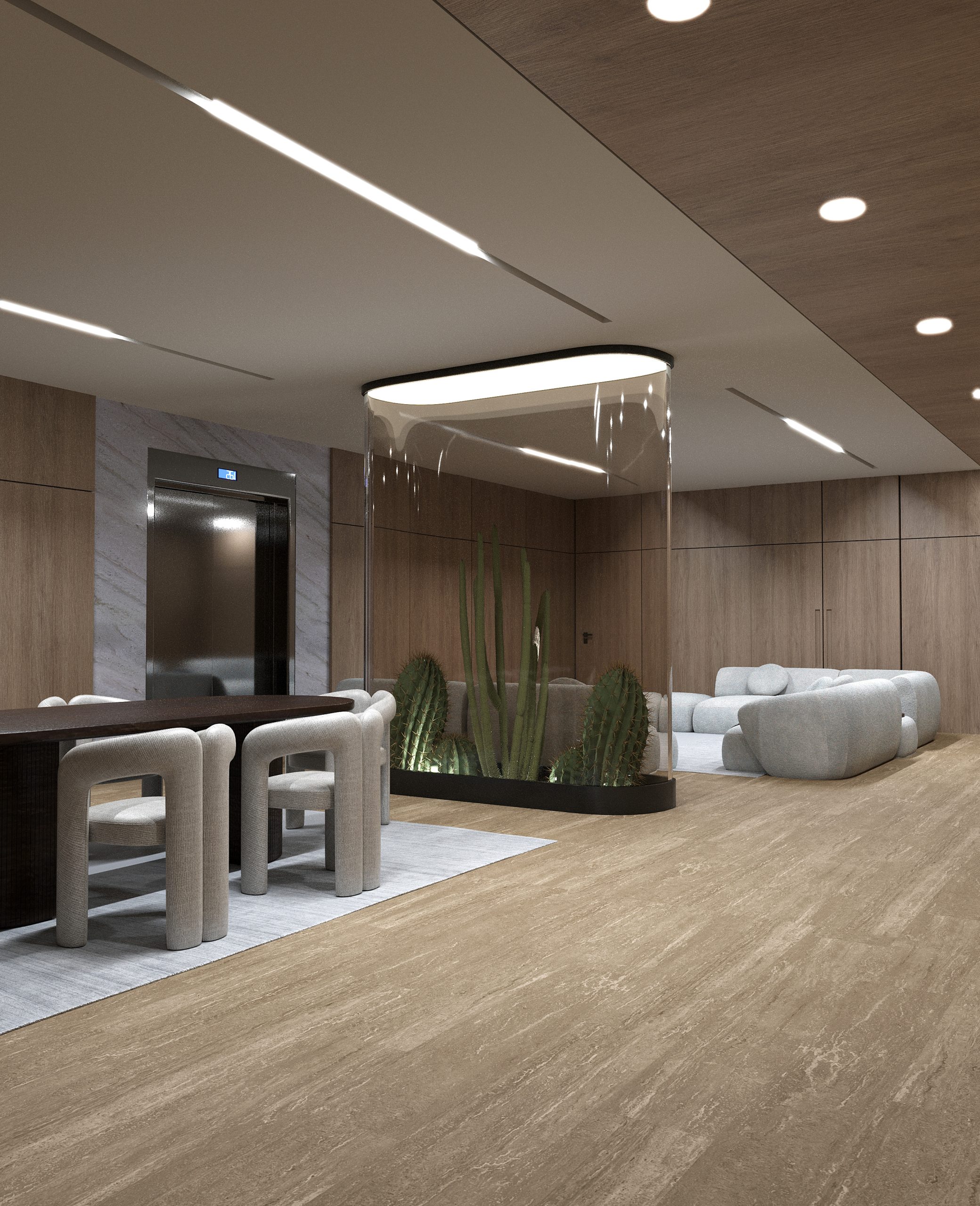
The core: stone vs wood-composite
SPC uses a stone-plastic composite core — denser, thinner and harder. WPC uses a wood-plastic composite core that is often softer and a little thicker because of foaming agents. Both cores are waterproof, but they feel and behave differently underfoot.
| SPC (MILAT) | WPC | |
|---|---|---|
| Core material | Stone-plastic composite | Wood-plastic composite |
| Density | Denser and harder | Softer, lighter |
| Waterproof | 100% waterproof | 100% waterproof |
| Dimensional stability | High — very stable | Good, more thermal movement |
| Dent resistance | Higher — rigid mineral core | Slightly softer surface |
| Underfoot feel | Firmer, with IXPE acoustic layer | Slightly softer, warmer |
| Best for | High-traffic, commercial, wet areas | Residential comfort-first rooms |
Stability and durability
Because its core is denser, SPC is typically more dimensionally stable and more resistant to dents and indentation — an advantage in high-traffic and commercial spaces. WPC's softer core can feel a touch more comfortable but tends to move more with temperature.
Which should you choose?
For durability, stability and heavy use — including commercial projects and wet areas — SPC is usually the stronger choice. MILAT builds every floor on an SPC core with an EIR surface, an AC5 wear rating, an IXPE acoustic layer (up to 21 dB) and a licensed Unilin click system.
Room by room: where each core makes sense
The comparison gets easier when you stop asking which is better and start asking where. In a bedroom or a home office, WPC's slightly cushioned core is a genuine comfort gain and its weaknesses rarely get tested. In kitchens, hallways, entrances and anywhere chairs slide and heels strike, SPC's dense core shrugs off the daily abuse that slowly marks a softer floor. Bathrooms suit either on waterproofing grounds, but SPC handles the temperature swings of a steamy room with less movement.
| Room | Better fit | Why |
|---|---|---|
| Bedroom | WPC or SPC | Comfort matters, wear is light |
| Kitchen | SPC | Dropped pans, sliding chairs, spills |
| Sunroom or conservatory | SPC | Handles heat swings with less expansion |
| Hallway and entrance | SPC | Grit, traffic and constant wear |
| Commercial space | SPC | Higher density resists rolling loads |
Heat, sun and underfloor heating
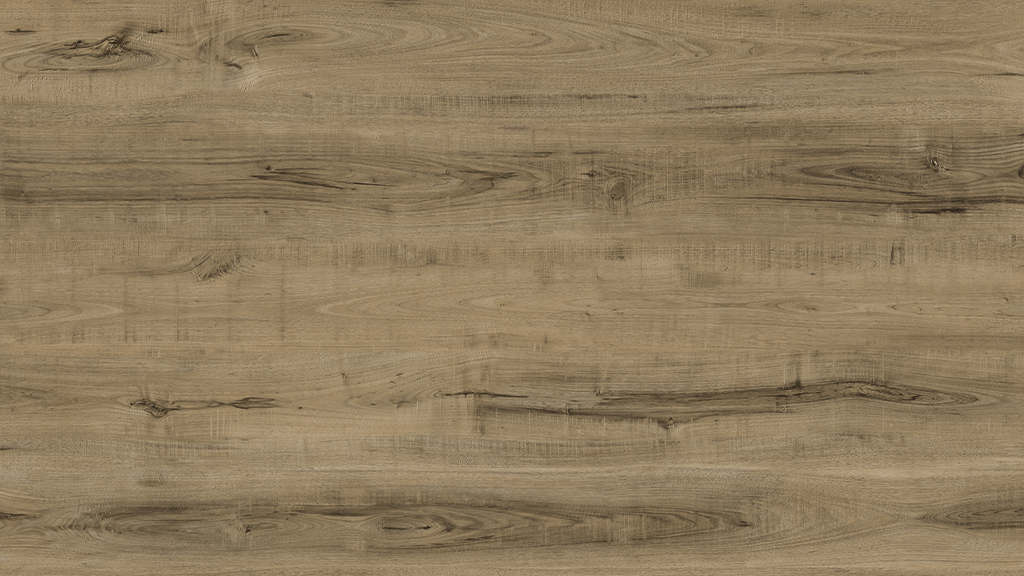
Climate separates these two floors faster than any showroom demo. WPC's foamed core expands and contracts more with temperature, which matters in conservatories, south-facing rooms with big glazing, and hot climates where indoor temperatures swing between air-conditioned days and warm nights. SPC's stone-heavy core is naturally more dimensionally stable in those conditions, which is also why it pairs more confidently with underfloor heating systems run within the manufacturer's stated limits. If your market or your home sees real temperature movement, that stability is worth more than a softer footfall.
Why manufacturers have largely moved to SPC
Walk any major flooring fair and you will notice the rigid-core aisles are dominated by SPC. There is a manufacturing logic behind that. A stone-polymer core runs consistently on modern extrusion lines, takes thinner profiles without losing rigidity, and delivers predictable results batch after batch. Foamed WPC cores are fussier to produce uniformly. MILAT Floor builds exclusively on SPC for exactly these reasons: a dense, 100% waterproof core, EIR surface texture and a licensed Unilin click all behave more predictably on a stable base. When most of the world's development effort flows into one core type, that type improves faster too.
The comfort gap is smaller than it used to be
WPC's traditional selling point was feel: warmer, quieter, a little forgiving underfoot. Modern SPC has closed much of that gap with attached acoustic underlays. An IXPE backing layer, like the one MILAT attaches with sound absorption up to 21 dB, softens footfall noise and takes the edge off the harder core. It does not turn SPC into a cushion, and it is not meant to. But if the only thing pulling you toward WPC is comfort, compare a bare WPC plank against an SPC plank with a quality attached underlay before deciding; the difference in the hand and underfoot is far narrower than the spec sheets suggest.
Mistakes buyers make when comparing the two
The most common error is comparing thickness as if it were quality. A thick WPC plank owes much of its height to foam; a thinner SPC plank can be substantially denser and tougher. The second error is comparing prices without comparing wear layers, since the wear layer determines how long either floor keeps its face. The third is choosing for the showroom rather than the room: a floor feels different under a socked foot for ten seconds than it performs under a family for a decade. Match the core to the conditions, then compare like for like.
Talk to MILAT Floor
Samples, specifications, OEM & private label, wholesale or export — our team is ready.