
Carpet and SPC rarely land on the same shortlist by accident — one is soft, warm, and cozy; the other is hard, waterproof, and easy to keep clean. The decision usually turns on the room. Bedrooms lean one way, kitchens and hallways the other, and plenty of homes end up using both.
Comfort versus cleanability
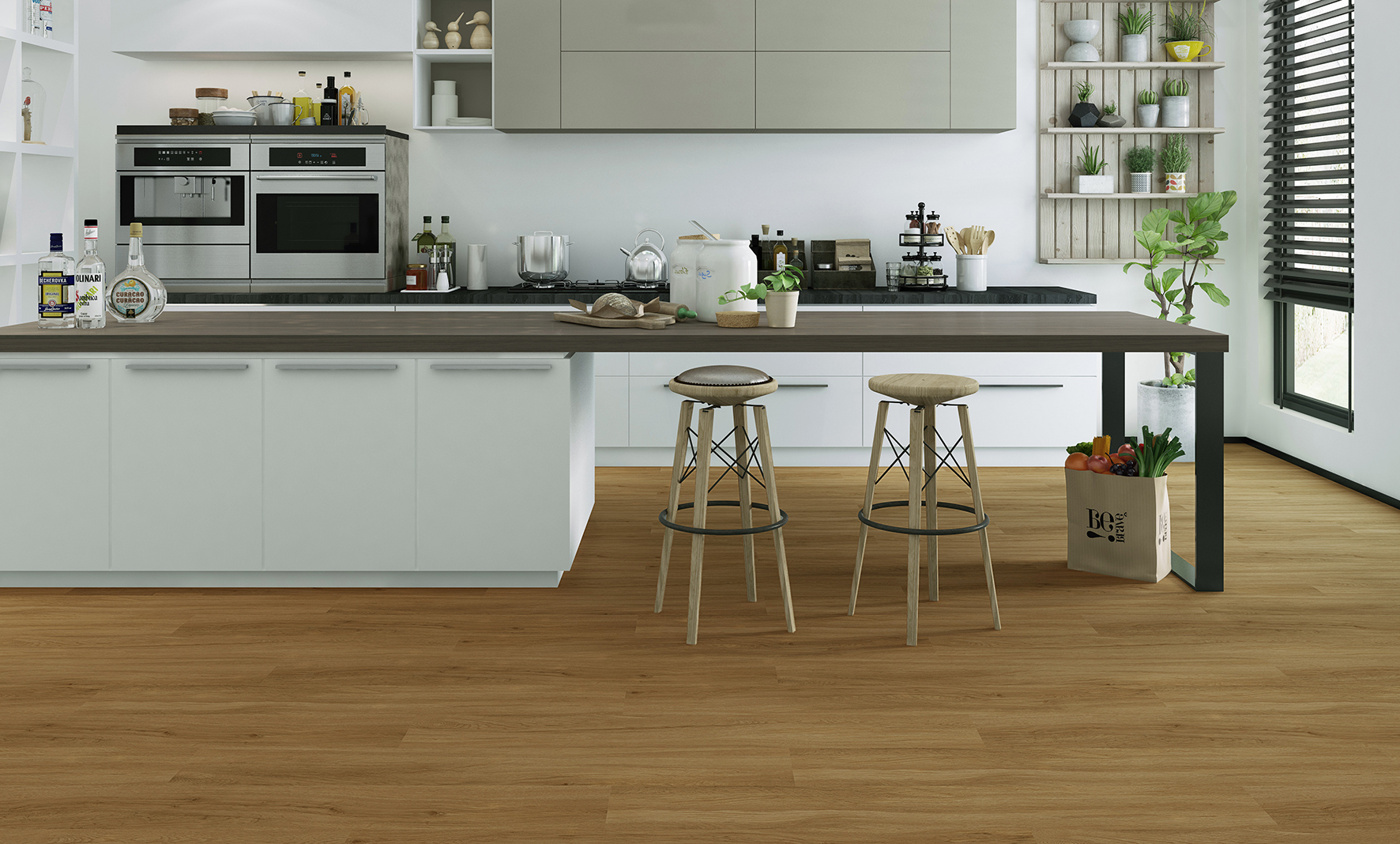
Carpet wins the comfort argument outright. It's soft underfoot, warm in winter, and cushions falls — a genuine plus in bedrooms and kids' rooms. SPC answers with cleanability. Its sealed, waterproof surface wipes clean, doesn't trap spills, and never holds odors. For anyone weighing cozy against low-maintenance, that's the core trade.
Allergens and indoor air
Carpet fibers trap dust, pet dander, pollen, and moisture, which can aggravate allergies and asthma if the carpet isn't cleaned thoroughly and often. A hard surface like SPC gives allergens nowhere to hide — a quick vacuum or damp mop clears them. Buyers sensitive to indoor air quality often look for third-party certification; MILAT's SPC is FloorScore certified for low VOC emissions, which speaks to what the floor gives off indoors.
Durability and traffic
Carpet mats, crushes, and stains in high-traffic lanes, and even good carpet shows wear paths within a few years in a busy home. SPC handles heavy traffic without flattening or staining; its wear layer and AC rating (up to AC5 on MILAT boards) are built for it, commercial settings included. In hallways, on stair landings, and by entryways, hard flooring simply lasts longer.
- Carpet is warmer, softer, and quieter underfoot
- SPC is waterproof, stain-resistant, and easy to clean
- Carpet traps allergens; SPC doesn't
- SPC resists the traffic wear and matting carpet shows over time
Water, stains, and pets
Spills are carpet's nemesis — wine, pet accidents, and muddy paws soak in and can stain or smell permanently. SPC is waterproof and non-porous, so the same mess wipes away. Households with pets and young children often choose SPC for living areas and keep carpet where softness matters most.
| SPC | Carpet | |
|---|---|---|
| Feel | Firm | Soft, cushioned |
| Warmth | Neutral | Warm |
| Waterproof | Yes | No |
| Stain resistance | High | Low |
| Allergen trapping | None | High |
| Cleaning | Vacuum or mop | Vacuum + periodic deep clean |
| Best rooms | Kitchens, baths, halls, living | Bedrooms, lounges |
Do you have to choose just one?
Most homes don't. A common approach puts SPC through kitchens, bathrooms, hallways, and living areas — anywhere spills and traffic are constant — and keeps carpet in bedrooms, where softness and warmth are the whole point. If you can only pick one for the whole house, SPC covers more situations without complaint; carpet is the specialist for comfort.
The acoustics question, properly
Carpet's real acoustic advantage is impact noise: footfalls, dropped toys, chair scrapes. It absorbs them at the source. A bare hard floor transmits them, which is why apartment rules often mention floor coverings. Modern SPC narrows this gap with an attached acoustic backing; MILAT planks carry an IXPE layer with sound absorption up to 21 dB, which addresses the downstairs-neighbour problem that used to hand carpet the argument by default. Within the room itself, carpet still softens echo more, but a rug and curtains recover most of that.
Stairs, halls and transition zones
Stairs deserve their own decision. Carpet on stairs is quiet and forgiving underfoot but wears fastest exactly there, on the nosing of each step, and shows it early. Hard flooring on stairs lasts far longer but demands proper stair nosings and a careful installer. Hallways are simpler: they collect the most grit and traffic in the house, which is the combination carpet handles worst and SPC handles best. Many homes settle on hard floors through halls and stairs runners for the middle ground.
What landlords and hosts have learned
Ask anyone who manages rentals or short-stay apartments and the pattern is consistent: carpet gets replaced between tenancies for reasons that have nothing to do with wear. Stains, odours and the general history of a used carpet are hard to hand to a new tenant, while a hard floor is mopped, inspected and photographed in an afternoon. That turnover economics, more than any single property of the material, is why rental stock has shifted so decisively toward resilient flooring over the past decade or so.
The same logic reaches guest rooms, home offices that double as meeting spaces, and any room strangers use. Carpet keeps a private history; hard floors reset to zero with a mop. If a room needs to be presentable to people who did not make its mess, that difference decides more than comfort does. Hosts who once swore by cosy carpet tend to convert after exactly one difficult checkout, and they rarely convert back.
When replacement day eventually comes
Think about the end of each floor's life, because you will meet it. Replacing carpet means emptying the room, tearing out carpet, gripper and underlay, and often dealing with what decades of use left in the fibres. Replacing a floating SPC floor means unclicking planks and carrying them out clean; single damaged planks can even be swapped without touching the rest of the room. The floor you can service in pieces disrupts a household far less than the one that only leaves in one piece.
Style flexibility: the rug decides
A carpeted room commits to one texture and colour wall to wall for the carpet's whole life. A hard floor with rugs lets you change the softness, colour and placement whenever taste or seasons change, and lets you take the expensive textile with you when you move. This is the quiet reason designers so often specify hard flooring plus rugs: it is not anti-carpet, it is pro-choice about where the softness goes. A rug can also be cleaned off-site or replaced outright when a stain wins, options a fitted carpet never offers. Coming from a city built on floor coverings, we would say enjoy both, deliberately, with the hard floor as the permanent layer and the textile as the changeable one.
Talk to MILAT Floor
Samples, specifications, OEM & private label, wholesale or export — our team is ready.