
Vinyl flooring has taken over a big share of homes and shops for good reasons: it shrugs off water, costs less than most hard flooring, and now imitates wood and stone convincingly. It is not perfect, though, and some of the honest drawbacks get glossed over in sales copy. Vinyl is a PVC-based product, not natural wood or stone, and knowing what that means helps you decide whether it fits your room.
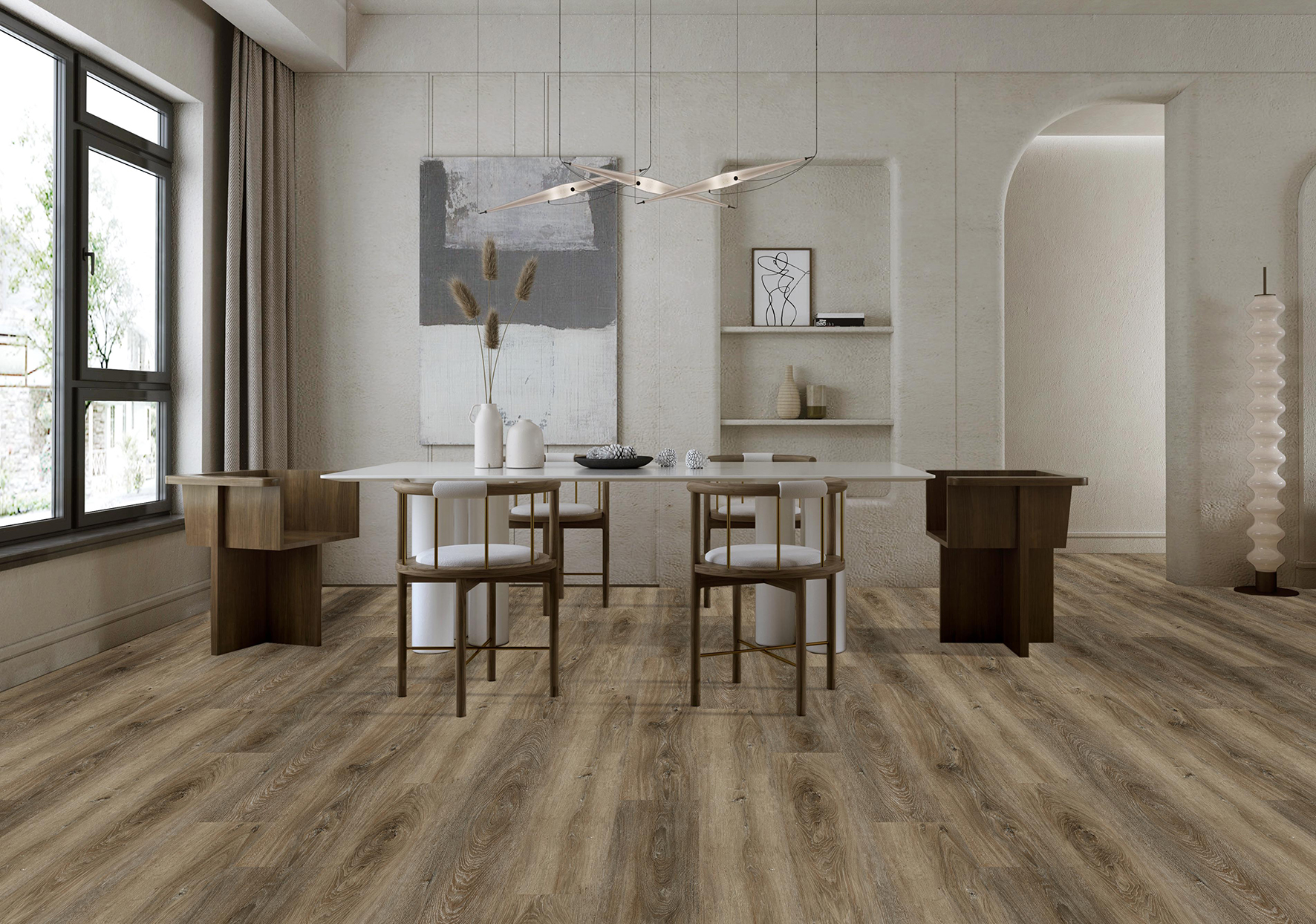
What counts as vinyl flooring
Vinyl covers a few formats. Sheet vinyl comes in large rolls and is genuinely seamless in wet areas. Luxury vinyl tile and plank (LVT) are individual pieces with a printed design layer and a wear layer on top. Rigid-core versions, SPC (stone plastic composite) and WPC (wood plastic composite), add a dense core so the plank stays flat and clicks together. All of them are built around PVC.
The pros
- Waterproof: rigid-core and sheet vinyl handle spills, bathrooms and kitchens without swelling.
- Affordable: usually cheaper to buy and install than wood, stone or tile.
- Comfortable and warm underfoot compared with ceramic tile, and quieter with underlay.
- Low maintenance: sweep and damp-mop, no sealing or waxing.
- Durable surface: a good wear layer resists scratches and scuffs in busy homes.
- Realistic looks: modern embossing and print mimic timber and stone closely.
- Easy to install: click versions float and go down fast with no glue.
The cons
- It is PVC-based, a plastic product, which matters to buyers who want natural materials.
- It is not real wood or stone, and up close it can read as a reproduction.
- Point loads can dent it: heavy furniture legs or dropped hard objects may leave marks, more so on softer LVT.
- It needs a flat subfloor; bumps and ridges telegraph through thinner products over time.
- Cheaper vinyl can fade or discolour with heavy direct sunlight unless UV-protected.
- It generally does not add resale value the way solid hardwood can.
- Removing older glued-down vinyl can be a messy job.
Where it makes sense
Vinyl earns its keep in kitchens, bathrooms, hallways and rented spaces, anywhere water resistance, easy cleaning and value matter more than having a natural material. If your heart is set on genuine timber underfoot, vinyl will not fully scratch that itch, and that is a fair reason to look elsewhere. For everywhere else, it is hard to beat on practicality. MILAT's SPC, as one example, is 100% waterproof with an AC5-rated wear surface and 2X UV coating to hold its colour.
Not all vinyl is equal: how to judge quality inside the category
The pros and cons of vinyl shift dramatically with quality, which is why two vinyl floors can have opposite reputations in the same street. The variables that matter are mostly invisible in a showroom: the wear layer's rating, the core's density and stability, the coating that resists scuffs and sunlight, and the pedigree of the click system if it floats. A plank with a commercial-grade wear layer, a dense mineral core and a licensed lock ages like a different species from a thin builder-grade plank, even when the printed decor looks identical on day one.
The buying mistakes that create vinyl regrets
- Choosing by decor photo alone and ignoring the wear layer specification
- Assuming every vinyl floor is fully waterproof, when only rigid-core types truly are
- Laying over an unprepared subfloor and blaming the floor for telegraphed bumps
- Picking a glossy finish that shows every scuff and footprint
- Buying exactly the room's area with no waste allowance or spare planks
- Skipping indoor air certification in bedrooms and children's rooms
Most vinyl disappointment traces back to one of these, not to the material itself. The floor usually did what its specification promised; the specification was just never read.
Which vinyl format fits which situation
| Format | Best suited to | Main limitation |
|---|---|---|
| Sheet vinyl | Budget refits and utility spaces needing a seamless surface | Repairs are patch-visible and realism is lowest |
| Glue-down LVT | Commercial areas with heavy rolling loads | Needs near-perfect subfloor and adhesive work |
| Click SPC rigid core | Homes, rentals, offices and wet rooms | Needs reasonable flatness and expansion gaps |
The honest environmental picture
Vinyl is a polymer product, and pretending otherwise helps nobody. The fair environmental case rests on three things: longevity, because a floor replaced half as often carries half the footprint of its cheaper rival; certified low emissions, with FloorScore certification confirming indoor air standards; and responsible manufacturing, evidenced by environmental management systems such as ISO 14001. If sustainability matters to you, judge suppliers on certificates and durability rather than slogans, and treat a long service life as the greenest feature a vinyl floor can have.
Think in cost per year, not cost per square metre
Vinyl's price advantage is real, but the smarter comparison is what a floor costs per year of good service. A quality rigid-core vinyl installed once, over a properly prepared subfloor, can outlast two cycles of bargain flooring while never demanding sanding, sealing or specialist cleaning. Add the quiet savings — no adhesive trade for click formats, no recurring maintenance products, repairs by plank instead of by room — and mid-range vinyl often ends up the cheapest floor you can own, rather than merely the cheapest you can buy.
Talk to MILAT Floor
Samples, specifications, OEM & private label, wholesale or export — our team is ready.