
Laminate and vinyl look alike on a showroom floor and even trick people once installed, but they're built from completely different materials. Laminate has a wood-fibre core; vinyl is plastic-based. That single fact drives how each one handles water, feels underfoot, and holds up — and it's the key to picking between them.
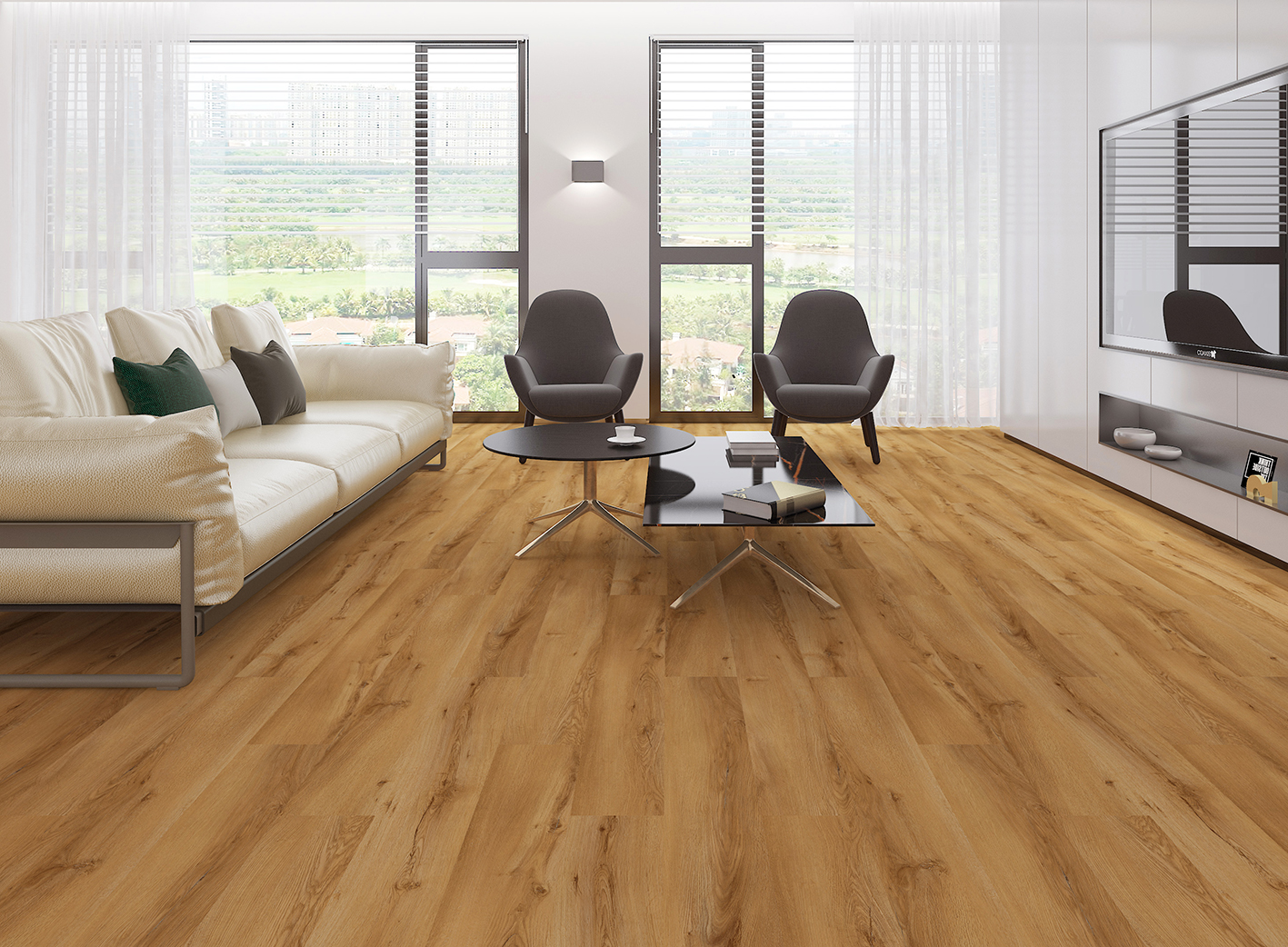
What laminate and vinyl are made of
Laminate is built around an HDF (high-density fibreboard) core — compressed wood fibers — topped with a photographic image of wood and a clear wear layer. Vinyl is made from PVC and comes as flexible sheets and planks or as rigid SPC and WPC. Because laminate's core is wood-based, water is its weakness; because vinyl's core is plastic, water isn't. Everything else flows from there.
Water resistance — the deciding factor
This is the split most buyers care about. Standard laminate can swell and delaminate if water reaches the HDF core through seams or edges, though newer water-resistant laminates hold up better for a time. Vinyl — especially SPC — is waterproof through the core, so it belongs in bathrooms, kitchens, laundries, and basements where laminate is a gamble. If moisture is anywhere in the picture, vinyl is the safer material.
Feel, sound, and realism
Laminate tends to feel hard and can sound sharp underfoot, though its thicker embossed surfaces can look extremely realistic. Vinyl runs warmer and quieter, and rigid vinyl with EIR (embossed in register) texture matches laminate's realism by aligning the surface emboss to the printed grain. Both use printed visuals, so the quality of the print and the texture — not the category — decides how convincing the wood look is.
- Laminate: wood-fibre core, water-sensitive, hard feel, often very realistic texture
- Vinyl: PVC core, waterproof, warmer and quieter, rigid or flexible options
- Neither can be sanded and refinished like solid wood
- Print and emboss quality drive realism more than the material name
Durability and maintenance
Both resist scratches and everyday wear well; laminate's tough melamine surface is genuinely hard, and its scratch performance is often excellent. Vinyl matches it with a wear layer and, on quality boards, a UV coating. The maintenance gap shows up around water: a wet mop is fine on vinyl but risky on standard laminate, which prefers a damp cloth and quick spill cleanup.
| Vinyl (incl. SPC) | Laminate | |
|---|---|---|
| Core material | PVC / stone-polymer | Wood-fibre (HDF) |
| Waterproof | Yes | No, water-resistant at best |
| Feel underfoot | Warmer, softer | Harder, cooler |
| Sound | Quieter | Can be sharper |
| Wet rooms | Suitable | Not recommended |
| Refinishing | No | No |
How to choose between them
Choose vinyl — SPC in particular — when waterproofing, comfort, and whole-home versatility top your list, especially with wet rooms or pets involved. Choose laminate when you want a hard, highly realistic wood look in dry rooms and you're comfortable keeping water off it. Compare the specs that actually matter: core material, wear layer or AC rating, texture, and the click system, rather than the category name on the box.
Room-by-room verdicts
Abstract comparisons blur; rooms decide. Here is how the choice usually lands when you walk a house door by door.
| Room | Better fit | Why |
|---|---|---|
| Kitchen | Vinyl / SPC | Spills and dropped pots are routine; a swollen laminate seam by the sink is a classic failure |
| Bathroom and laundry | Vinyl / SPC | Standing water and humidity rule out wood-fibre cores |
| Bedrooms | Either | Dry, low-risk rooms where feel and budget can decide |
| Entrance hall | Vinyl / SPC | Wet shoes, umbrellas and grit favour a waterproof, textured surface |
| Basement | Vinyl / SPC | Below-grade moisture makes laminate a gamble even with barriers |
Climate changes the answer
The drier and more stable your climate, the better laminate performs; the more humid or variable, the stronger the case for vinyl. In coastal and tropical regions, ambient humidity alone works on a wood-fibre core over the years, opening seams and lifting edges without a single spill. Rigid SPC is dimensionally calmer because its stone-polymer core barely responds to moisture in the air. Big temperature swings, holiday homes left unheated, rooms with large glazing that heat up in the sun: in all of these, an SPC product installed with correct expansion gaps is the lower-stress choice.
What each core demands from your subfloor
Both floors float, but they forgive differently. Laminate planks are thick and stiff, so they bridge small dips quietly. Thin flexible vinyl telegraphs every bump and needs a near-perfect substrate. Rigid SPC sits usefully between the two: stiff enough to span minor imperfections, dimensionally stable enough not to need the humidity precautions of laminate. Whichever you choose, moisture in a fresh concrete screed is the silent killer; laminate suffers visibly, and even a waterproof floor can trap that moisture underneath, so screed testing before install is not optional on new builds.
Underfloor heating and cold floors
Both laminate and quality vinyl can go over water-based underfloor heating within the temperature limits their manufacturers state, but they behave differently. Laminate's wood core insulates slightly more, so the system responds a touch slower; it also cares more about the humidity cycling that heating creates. SPC transmits warmth readily and its stable core tolerates the daily warm-cool rhythm well. If there is no heating at all, remember that any hard floor takes the temperature of the room; an attached IXPE layer under SPC adds a small but noticeable degree of comfort over bare screed.
Repairs, refreshes and end of life
Think about year eight, not day one. A damaged laminate plank in the middle of a room can be swapped, but if the damage was moisture the affected boards are often several, and matching a discontinued decor is hard. Click vinyl planks swap the same way, and because the usual damage is a scratch rather than swelling, repairs stay local. When the whole floor eventually comes up, floating floors of both kinds lift without demolition, which tenants, landlords and refit crews appreciate. Neither can be sanded or refinished, so in both cases the wear layer you buy on day one is the lifespan you get.
Talk to MILAT Floor
Samples, specifications, OEM & private label, wholesale or export — our team is ready.