
Every wood-look floor starts with a design decision: which oak, which grain, how much knot, what colour under what light. Turning that decision into a plank is a craft of its own — part photography, part colour science, part manufacturing. Here is how flooring decors are actually developed, from the studio to the press.
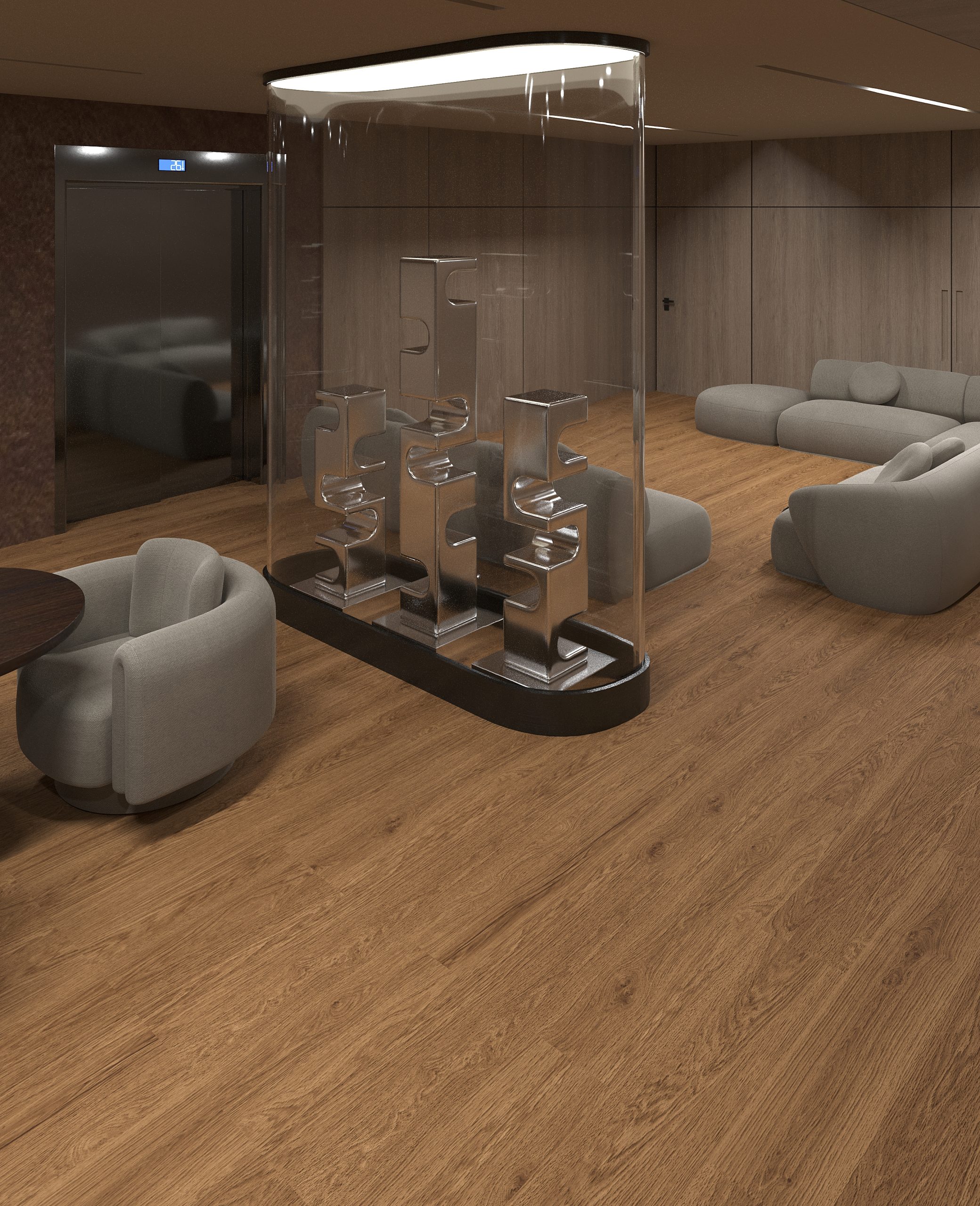
It starts with real material
Convincing wood decors begin with real timber: boards are selected, prepared and scanned or photographed at high resolution. Designers then compose planks from that raw grain — balancing knots, cathedral figures and calm areas so a floor laid across a whole room repeats naturally instead of showing obvious pattern tiles.
Repeat and variation
A decor is printed as a repeating design, and the designer's craft is hiding the repeat: distributing distinctive features so the eye never catches the same knot twice in a glance. More plank variation within a design reads as more authentic underfoot.
Colour development
The same grain can become pale Nordic oak, warm honey or smoked walnut. Colourways are tuned against physical proofs under different light sources, because a tone that looks right under studio light can turn grey in a north-facing room. This is also where custom colours for private-label ranges are developed against a client's reference.
Matching texture to print: the EIR step
For an Embossed In Register surface, an embossing structure is created to follow the printed grain — every groove and knot in the texture mapped to its printed twin. In production, press and print are kept in register so the texture lands exactly on the design. This alignment is what separates a floor you have to touch to disbelieve from one that reads as a photo of wood.
From design to collection
Finished decors are proofed as real planks, reviewed in room-sized layups and only then admitted to a collection. MILAT's collections — 54 designs across Exclusive, Perfecta and Triollo EIR — are built this way, and the same development path produces bespoke designs for OEM and private-label partners.
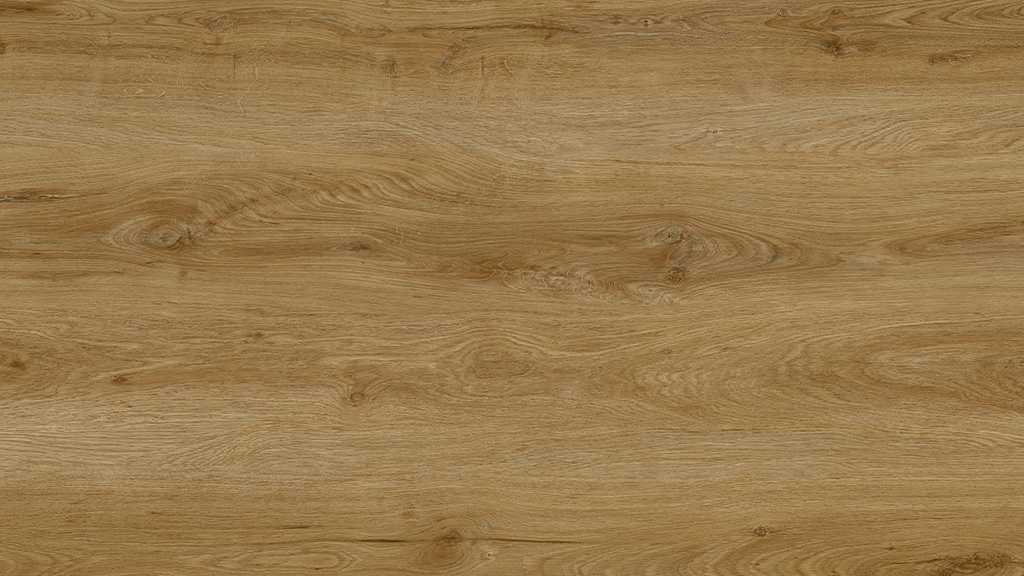
Where trends come from before they reach the floor
Floor fashion trails the wider interiors world by a season or two. A tone appears in furniture and paint fairs, then kitchen fronts, then flooring picks it up once it proves durable in the market's eye. Design teams read the big European exhibitions, watch what architects specify, and track which sample requests rise month over month, because sample demand is the earliest honest signal a decor sends. The craft is judging which trends have legs: greys arrived slowly and stayed for years, while some fashionable tints spike and vanish. A collection built only on this season's feed would be obsolete before the presses cooled.
Geography changes the brief
The same oak is not the same oak everywhere. Northern European buyers want pale, matt, low-knot calm; Gulf markets often prefer warmer, richer tones and are more open to gloss; North American tastes run wider and browner; and strong sunlight versus grey daylight changes how every one of those decors reads on site. An exporting manufacturer designs for this map deliberately, keeping a spine of decors that travel everywhere and regional accents that do not pretend to. MILAT's 54 designs across three collections are curated that way, which is why an importer's first range meeting starts with where they sell, not what they like.
A design must pass the room test, not the desk test
A decor that looks superb as a single plank on a desk can fail as eighty square metres of floor. Before launch, candidate designs are built into large trial layouts and viewed at a distance, under warm and cool light, at morning and evening angles, precisely because repeat patterns and colour casts only reveal themselves at scale. Gloss level is judged the same way: sheen that sparkles in a lightbox can glare in a sunlit room. Designs also sit alongside popular furniture tones, since a floor is never seen alone. The desk chooses candidates; the room chooses the collection.
Texture passes its own audition. An EIR emboss is checked against the print at raking light angles, because a register that drifts even slightly breaks the illusion the whole design depends on.
Why some decors run for a decade and others date
Every collection has designs that quietly outsell everything year after year, and they share a temperament: believable wood tones, moderate contrast, texture that reads as material rather than effect. Highly stylised decors, extreme colour washes, dramatic distressing, sell fast and age fast, both on trend cycles and in living rooms. Manufacturers manage this like a portfolio: durable neutrals carry the volume and stay in the range for years, which also protects customers who need matching floor for an extension later, while a rotating edge of bolder designs keeps the collection current. Retiring a decor is a slower, more argued decision than launching one.
The importer's seat at the design table
Design development is not sealed inside the factory. Distribution partners feed back which samples convert to orders, which decors photograph well but stall at the counter, and what competitors launched last quarter, and that field intelligence steers colour development more than any mood board. Private-label partners go further, commissioning exclusive tones or requesting regional variants of a proven design. For a buyer, this is a reason to choose a manufacturer with in-house design capability: you are not just buying today's catalogue, you are buying a seat near the table where next year's is decided.
Talk to MILAT Floor
Samples, specifications, OEM & private label, wholesale or export — our team is ready.