
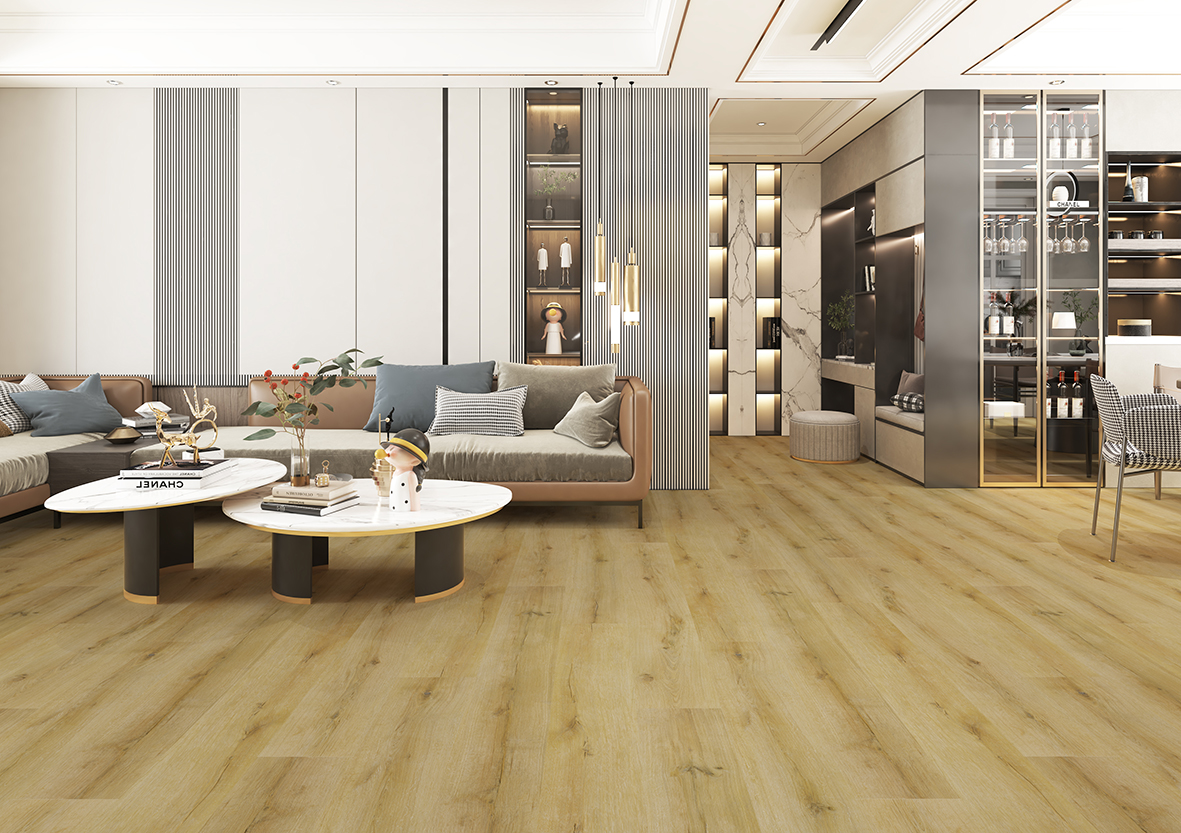
Herringbone is one of the oldest and most enduring floor patterns, and it has moved firmly into the mainstream. Laid in SPC, it keeps its timeless look while adding a 100% waterproof core and tool-free click installation. This guide covers how herringbone SPC is laid, where it works, and what to plan for.
What makes herringbone SPC different
Herringbone SPC uses shorter planks cut as matching left and right pieces that lock at 90 degrees to form the classic zigzag. Because the core is rigid and waterproof, you get the pattern's craft with the performance of modern rigid vinyl — stable joints, wet-area suitability and a hard-wearing surface.
Which direction to lay it
The most common approach is to run the main point of the herringbone toward the longest wall or the main source of natural light, which lengthens the room and creates a clean, continuous line. In a hallway, running the pattern down the length draws the eye through the space.
Order extra for the pattern
Herringbone uses more material than a straight lay because of the angled cuts at the walls. Where a straight lay might need a 5 to 10% waste allowance, a herringbone layout typically needs 10 to 15%. Confirm the coverage and plan your order accordingly.
Where herringbone SPC works
- Living rooms and hallways, where the pattern makes the strongest impression.
- Kitchens and open-plan spaces, thanks to the waterproof core.
- Retail and hospitality interiors that want a premium, characterful floor.
It is an installer's pattern: hire accordingly
Straight-lay click flooring forgives a competent amateur; herringbone does not. The pattern must be set out from a centreline, the first rows govern every row after them, and a half-degree drift at the start becomes a visibly crooked spine by the far wall. Cuts at every perimeter meet the wall at an angle, doubling the trimming work. When vetting fitters, ask specifically to see photographed herringbone jobs, not just plank floors, and expect the labour quote to be noticeably higher than straight lay for the same room. That premium is not padding; it is the setting-out time that makes the pattern look effortless.
Borders and frames: the detail that finishes the look
Classic parquet rooms rarely ran the pattern hard into the skirting; they framed it with a border of straight planks, and the same trick transforms herringbone SPC. A single or double straight-lay frame around the field tidies the angled perimeter cuts, gives the pattern a deliberate edge, and solves awkward junctions at doorways and bay windows. In open plans, a border can also close the pattern gracefully where herringbone hands over to straight-lay in a connected space. Discuss borders at the quoting stage, since they change both the setting-out and the material calculation.
Match the pattern scale to the room
Herringbone lives or dies by proportion. Generous rooms carry a larger format handsomely, while small rooms suit the finer, busier weave of a compact format that fits more full zigzags between the walls. The half-planks that many ranges supply for the purpose keep the geometry crisp at a scale click joints handle well. Before ordering, sketch the room and count how many full pattern repeats fit across its width; a room that only fits a couple of repeats will read as stripes, not herringbone, and a smaller format fixes that on paper for free.
Ceiling height plays a quiet part as well: low rooms feel busier under a large, high-contrast pattern, while a finer weave in a soft tone keeps them calm. When in doubt, lay out a square metre of loose planks in the actual room before committing the order.
Let the decor's variation do the work
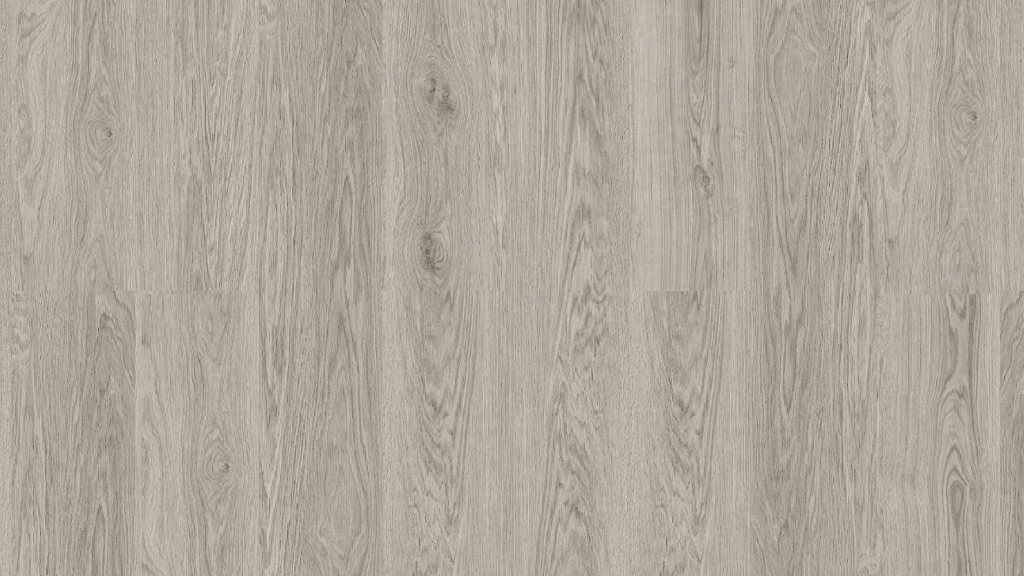
In straight lay, heavy shade variation between planks can look restless. In herringbone the logic flips: the pattern is made readable by contrast between neighbouring planks, and a decor where every board is identical produces a flat, printed-looking zigzag. Choose designs with natural tonal movement and visible grain, and shuffle planks from several boxes as you lay. EIR texture sharpens the effect, because the embossed grain follows the print, so light catches each angled plank differently, exactly the way it plays on real parquet blocks. The floor then changes subtly through the day, which is most of herringbone's charm.
Flatness tolerance shrinks with the pattern
A straight-laid floor rides gentle subfloor waves with some grace; herringbone does not, because every plank meets its neighbours at an angle and any dip twists the joint in two directions at once. The symptoms are specific: clicking sounds underfoot, hairline steps at the zigzag points, and joints that fatigue at the corners. Treat subfloor flatness checks as non-negotiable before a herringbone job, with a long straightedge across the room in several directions, and budget for levelling compound where the readings say so. Money moved from the plank budget to the prep budget pays back on this pattern more than on any other.
Talk to MILAT Floor
Samples, specifications, OEM & private label, wholesale or export — our team is ready.