
The same vinyl or laminate plank can go down two ways: click it together as a floating floor, or bond it to the subfloor with adhesive. The plank might look identical either way, but the install method changes how fast the job goes, how flat your subfloor needs to be, and how easy it is to fix a damaged board years later. Here is how the two compare and where each one earns its place.
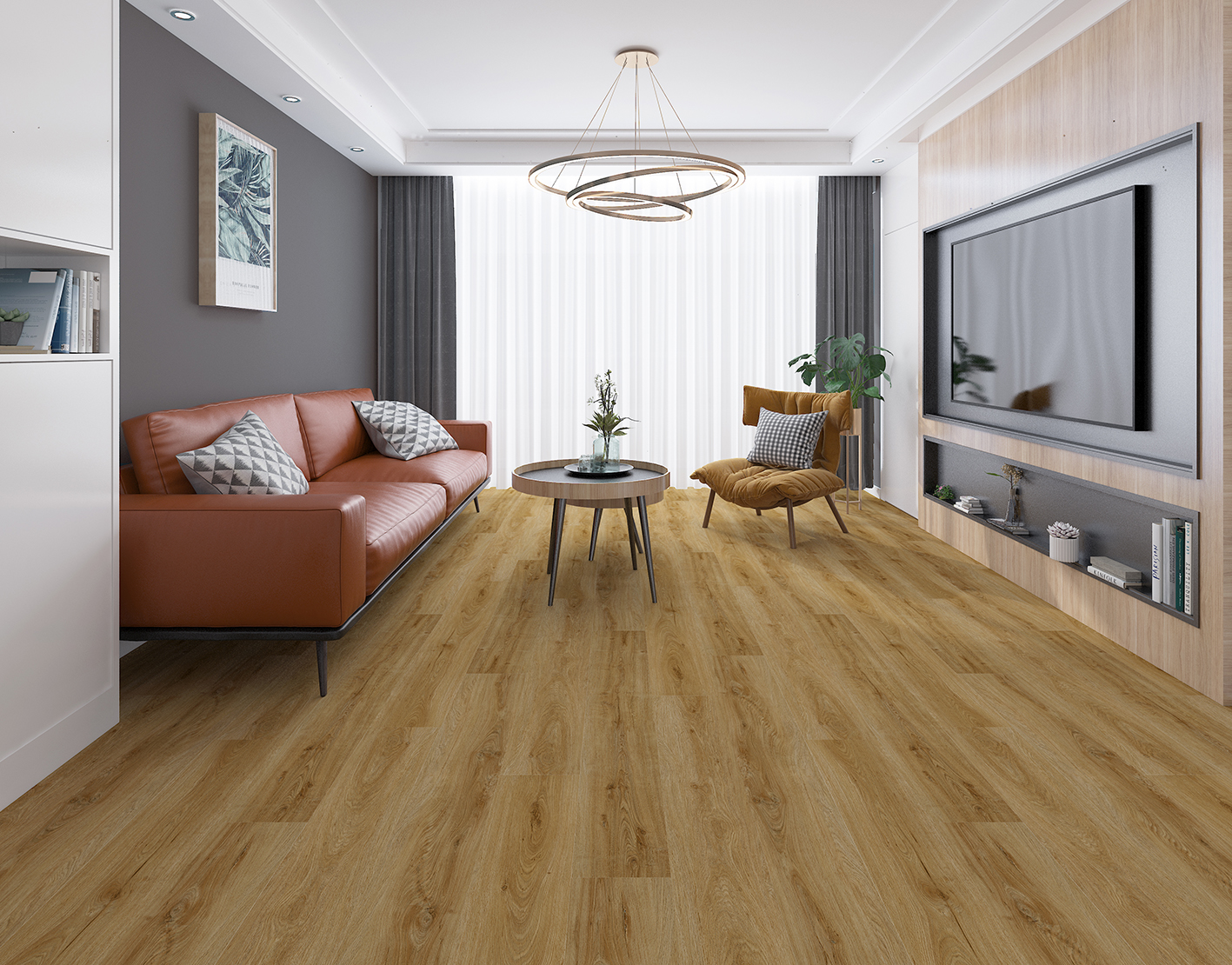
Floating click install
Click planks lock to each other and rest on top of the subfloor. There is no adhesive, so you can walk on the floor as soon as it is down, and a room goes quickly. Because nothing is bonded, a damaged plank can be unlocked and swapped without disturbing the rest. The trade-off is that the subfloor still needs to be reasonably flat, and very large rooms may need transition strips to manage expansion.
Glue-down install
Glue-down planks are bonded directly to the subfloor with adhesive. The result is a solid, dead-flat floor with no float and minimal movement underfoot, which suits heavy rolling loads and very large open areas. The downside is labour: the subfloor must be clean, dry and flat, you wait for adhesive to cure, and lifting a bonded plank for a repair is slow and messy.
Side by side
| Factor | Click (floating) | Glue-down |
|---|---|---|
| Install speed | Fast, no cure time | Slower, adhesive must cure |
| Subfloor prep | Flat, but forgiving with underlay | Must be very flat, clean and dry |
| Repairs | Unlock and swap a plank | Cut out and re-bond, slow |
| Reversibility | Can be lifted and reused | Effectively permanent |
| Feel underfoot | Slight float, add underlay for comfort | Solid, dead-flat |
| Best for | Homes, DIY, quick refits | Large commercial areas, heavy rolling loads |
| Labour cost | Lower | Higher |
Which should you choose?
For most homes, a floating click floor is the practical pick: it goes down fast, needs no wet adhesive, and a scuffed plank is a quick fix rather than a project. Glue-down makes more sense in large or high-traffic commercial spaces, or under heavy rolling loads where you want zero movement. MILAT's SPC uses a licensed Unilin click and installs up to 60% faster than glue-down, while staying reversible if a board ever needs to come up.
- Pick click for speed, DIY, apartments and easy future repairs.
- Pick glue-down for very large floors, heavy carts or wheelchairs, and where absolute flatness matters.
- Either way, get the subfloor flat first; it is the most common cause of a bad result.
The repair story: one plank versus one patch
Damage is inevitable over a floor's life; what differs is the surgery. On a click floor, a ruined plank in open field can be released and replaced, or in the worst case the floor unclicks back from the nearest wall, and the repair disappears completely if you kept attic stock from the original batch. On a glue-down floor, the damaged piece is cut out and a new one bonded in; done well it is quick and local, but it demands adhesive skill, and the fresh plank can sit a shade different in sheen until it weathers in. Households and landlords tend to value the click route; facility teams with a good fitter on call often prefer the glue patch.
Rolling loads and point loads behave differently
Wheels are the hidden variable in this choice. Hospital beds, roll cages, office chairs on castors and pallet trucks all concentrate force into a small moving contact patch. A glued floor transfers that force straight into the subfloor, which is why heavy-rolling environments have traditionally specified glue-down. A rigid SPC click floor narrows the gap considerably, because the stone-polymer core spreads load and the licensed Unilin joint locks tight, but a floating floor still has its limits under constant heavy traffic in warehouse-like conditions. Match the method to the heaviest wheel the space will ever see, not the average one.
Doorways, long runs and where floors need to breathe
A floating floor moves as a raft with temperature and humidity, so large or complicated layouts need expansion joints and doorway transitions, and the manufacturer's maximum run lengths are real limits, not suggestions. A glued floor is restrained across its whole area, which is why huge open spaces can be laid without breaks. In a home this rarely decides anything, since normal rooms sit comfortably within click limits. In a sprawling retail floor plate or a corridor grid with many door thresholds, count the transitions you would need with click; if the answer offends the design intent, glue-down earns its extra preparation.
End of life and temporary spaces
Think about how the floor leaves the building. A click floor lifts plank by plank, often reusable, leaving a clean subfloor behind; that makes it the natural pick for rented premises, pop-up retail, exhibition builds and any fit-out where the lease says restore on exit. A glued floor comes up with scrapers and grinding, and the adhesive residue becomes the next project's subfloor problem. Fit-out contractors who work in shopping centres learn this arithmetic early: the install cost is only half the story, and the strip-out cost is written into the method you chose years earlier.
What installer skill does to the outcome
The two methods fail in different hands. Click is tolerant of modest experience: the licensed joint controls alignment, mistakes are visible immediately and reversible by unclicking. Its real dependency is subfloor flatness. Glue-down amplifies craft in both directions: a skilled fitter produces a superb, permanent result, while an unskilled one produces open joints, adhesive in the seams and hollow spots that cannot be corrected without tearing up the work. If your labour pool is variable, that asymmetry should weigh as heavily as any technical property of the floor itself.
Talk to MILAT Floor
Samples, specifications, OEM & private label, wholesale or export — our team is ready.