
Search for waterproof flooring and you will find dozens of vinyl planks all claiming the same thing. Some deserve the word; some are quietly hoping you do not read the small print. The difference comes down to the core hidden under the printed surface. Understanding that one layer tells you which floors you can put in a bathroom without worry, and which ones are only safe from the occasional splash.
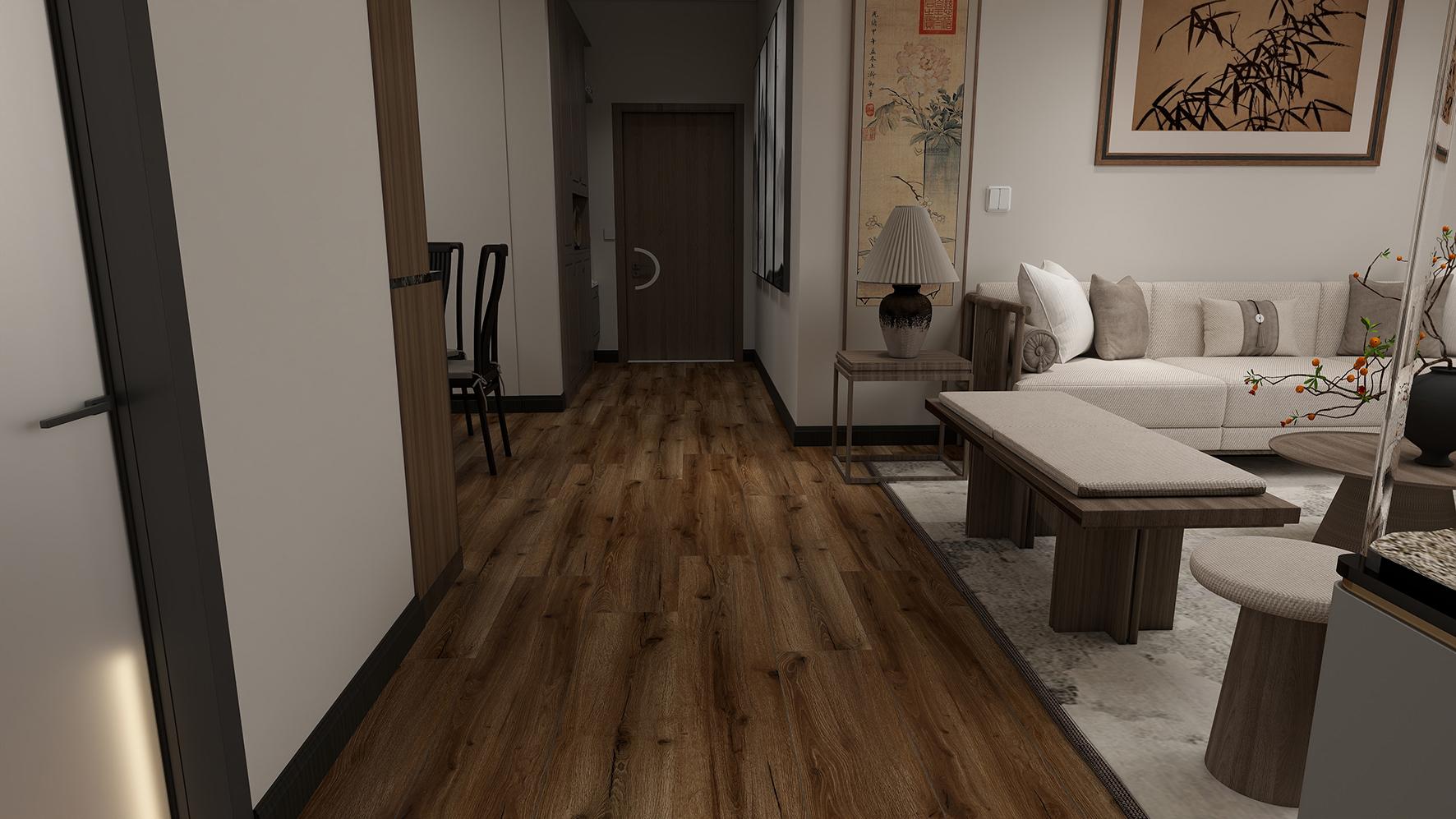
Waterproof vs water-resistant: the line that matters
These two terms get used as if they mean the same thing. They do not. Water-resistant means a floor shrugs off surface moisture for a while — a wiped-up spill is fine, but standing water over time can still cause trouble. Waterproof means water cannot damage the floor through its thickness at all; it can sit, it can seep to the edges, and the plank does not swell, warp or delaminate. For a laundry, bathroom or kitchen, that gap between the two words is the whole decision.
What makes a vinyl plank truly waterproof
It is the core. A vinyl plank is a stack of layers, and the middle one carries the load. Rigid planks use one of two waterproof cores. SPC — stone plastic composite — is a dense mix of limestone and PVC that does not absorb water. WPC — wood plastic composite — is a foamed PVC-and-wood-flour core that is also waterproof but softer and warmer. Because neither core takes on water, both are waterproof through their full thickness, not just on top.
| Core type | Waterproof? | Why |
|---|---|---|
| SPC (stone-polymer) | Fully waterproof | Dense limestone-PVC core absorbs no water; stable in humidity |
| WPC (wood-polymer) | Fully waterproof | Foamed PVC core absorbs no water; softer and warmer underfoot |
| Flexible LVT | Water-resistant only | Thin flexible vinyl, usually glued; water can reach seams and adhesive over time |
Why flexible LVT is only water-resistant
Flexible luxury vinyl tile is thin and bends in the hand. It has no rigid core to seal out moisture, and it is typically glued down or loose-laid, which leaves seams and adhesive that standing water can eventually reach. The vinyl surface itself resists water, so LVT is fine against splashes and mopping — but leave a burst pipe or an overflowing bath sitting on it and the edges and glue are the weak point. That is why careful sellers call flexible LVT water-resistant, not waterproof.
Where waterproof vinyl plank belongs
- Bathrooms and en-suites — the classic case for a fully waterproof SPC core.
- Kitchens and utility rooms — spills, dishwasher leaks and mopping are routine.
- Entryways and hallways — wet shoes and umbrellas arrive here first.
- Basements — where ground humidity would ruin wood or laminate.
- Open-plan homes — one waterproof floor can run from a dry living room straight into a wet kitchen.
Why MILAT builds on SPC
MILAT manufactures SPC flooring with a 100% waterproof stone-polymer core, so the floor is waterproof by construction rather than by a surface treatment that can wear off. The build adds an EIR surface for realistic wood looks, a licensed Unilin click that installs floating and tool-free, and an IXPE acoustic backing that reduces impact noise by up to 21 dB. That makes it a genuine fit for the wet and busy rooms where water-resistant floors fall short.
Matching flooring to a bathroom, a kitchen or a whole wet-prone home? Tell us the rooms at sales@milatfloor.com or call +90 535 960 79 46, and we will recommend the SPC build that fits.

How to read a spec sheet with a sceptic's eye
Waterproof is the most abused word in flooring marketing, so learn to look past the headline. On the specification, look for the core type spelled out — a stone polymer composite core is inherently waterproof, a flexible LVT is not, whatever the banner says. Check whether the waterproof claim covers the whole plank or just the surface, and whether the joint system is a licensed profile that closes tight. If a datasheet is vague where it should be precise, treat that vagueness as an answer. Manufacturers with genuinely waterproof construction say so in specific, testable language.
Try the glass-of-water test yourself
You do not need a laboratory to check a waterproof claim; you need a sample and a weekend. Stand a plank in a glass of water and leave it for days: a true SPC core comes out unchanged in size and shape, while wood-based boards and lesser composites swell at the edges. Click two planks together, pour water over the joint and leave it, then open the joint and inspect. It is crude, but it separates marketing from material in a way no brochure can, and any confident manufacturer will happily give you the sample to do it.
After a real flood: what actually happens
Waterproof flooring changes what a flood costs, not whether it happens. When a washing machine hose lets go over a true SPC floor, the planks themselves survive: nothing swells, nothing delaminates. The job is then drying, not replacing — standing water is extracted, and because click-installed SPC floats, sections can be lifted so the subfloor beneath dries fully before the same planks go back down. Compare that with laminate or wood, where the flooring itself is usually the biggest casualty on the claim. Insurers and landlords have noticed the difference, which is quietly driving SPC into rental stock.
The wet-room details that finish the job
A waterproof plank deserves waterproof detailing. In bathrooms and laundries, the floor's perimeter is the honest weak point: water that reaches the expansion gap can sit at the subfloor edge. Good practice seals the perimeter under skirtings with a flexible sealant bead, keeps the expansion gap itself intact behind the seal, and runs sealant around pipe penetrations and door frames. None of this is difficult, and installers do it routinely — but it is the difference between a floor that is waterproof and a room that is.
Humidity is the everyday test nobody talks about
Floods are rare; humidity is daily. Bathrooms steam up, coastal apartments live at high moisture half the year, and unheated holiday homes swing between damp winters and hot summers. Wood-based floors respond to all of it with movement. An SPC core is mineral and polymer, so seasonal humidity passes over it with almost no dimensional response — joints stay closed, planks stay flat. If your building or climate runs humid, this quiet stability is worth more over ten years than the dramatic flood resistance on the box.
Talk to MILAT Floor
Samples, specifications, OEM & private label, wholesale or export — our team is ready.