
A restaurant floor takes a beating that most homes never see: dropped cutlery, red wine, a mop three times a day, and chairs dragged across it from open to close. SPC handles that routine well because the core is rigid and 100% waterproof, and the wear layer is rated for commercial traffic. Here is where it earns its place in front-of-house dining, cafe seating, and service aisles, and where you should check specifics with us first.
Spills stay on the surface, not in the floor
MILAT SPC has a 100% waterproof rigid core, so a knocked-over glass or a coffee spill sits on top instead of soaking into a seam. Staff wipe it and move on. That matters most around the bar, the pass, and busy two-top zones where accidents happen every shift.
Rated for constant footfall
Our top wear rating is AC5, the level associated with heavy commercial use, and our Triollo EIR range sits at that heavy-commercial end. A dining room that fills and empties several times a day is exactly the kind of traffic this is built for, and the 2X UV coating helps the surface hold up to daily cleaning.
A wood look that sets the mood
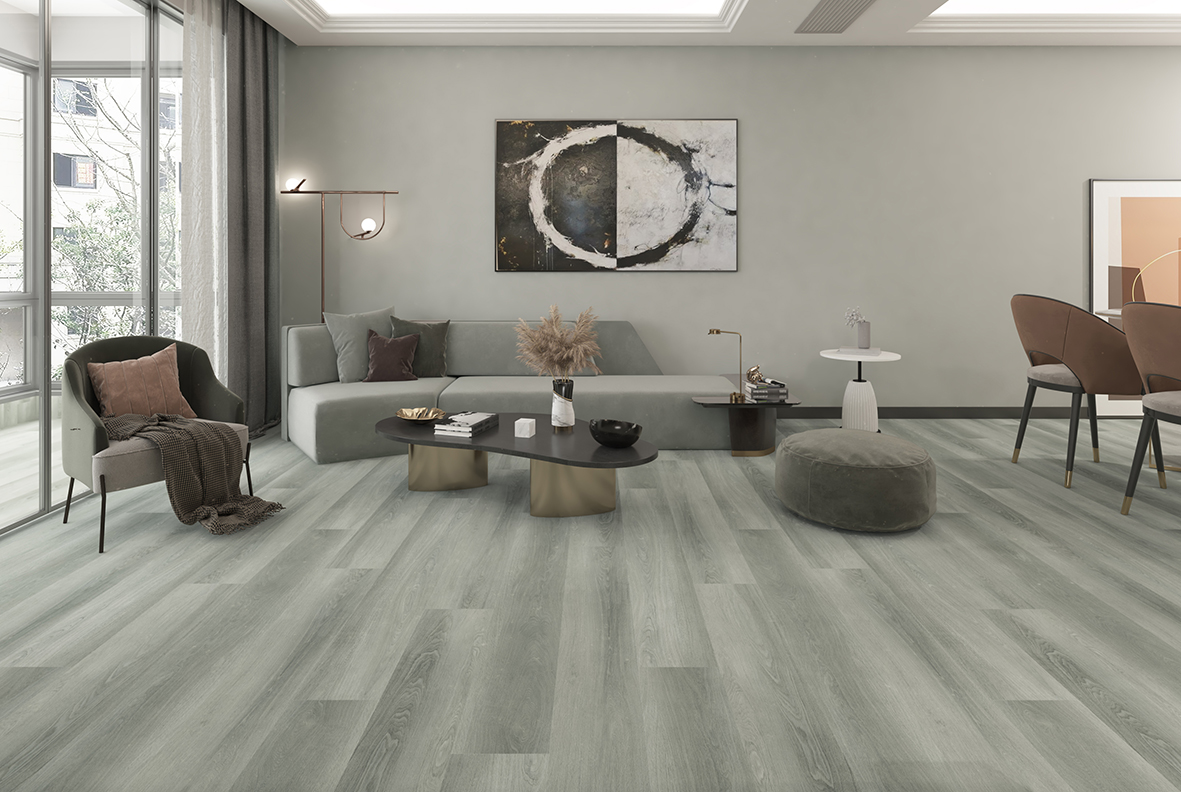
Ambience sells tables. SPC gives you the warmth of timber without the maintenance, and the EIR (embossed-in-register) surface aligns the texture with the printed grain so it reads as real wood underfoot and under low lighting. Choose a warm oak for a relaxed cafe or a darker walnut for an evening restaurant, all from a floor you can actually mop every night.
Grease and stains wipe down
The dense surface does not absorb the way a porous floor does, so grease splatter near service areas and food stains at the table lift with routine cleaning. No sealing, no waxing, no annual refinishing shutting your dining room for a weekend.
Fit out in phases, reopen faster
Licensed Unilin click means planks lock together and float over a prepared subfloor, with no wet adhesive curing time. You can section off an area, fit it, and keep the rest of the space working, which shortens the closure that eats into revenue during a refit.

Where to confirm details with us
Front-of-house dining, cafe floors, and service aisles are a natural fit. Heavily greasy back-of-house kitchens and genuinely wet zones have their own slip and safety requirements, and we do not want to overstate a rating we would need to verify. Tell us the zones you are flooring and we will confirm the right approach per project.
Planning a restaurant or cafe fit-out? Email sales@milatfloor.com or call +90 535 960 79 46 and we will help you spec the right ranges zone by zone.
Front of house and back of house are different floors
The dining room and the kitchen should never share a specification. Front of house is SPC territory: guests, spills, chair traffic and the nightly mop, all within what a commercial-rated click floor handles comfortably. Behind the pass, the rules change; commercial kitchens involve hot oil, drainage falls and hygiene regimes that belong to dedicated safety flooring, and no honest SPC supplier claims otherwise. The interesting line is the transition: place it at the kitchen door with a proper profile, keep the SPC on the guest side of the threshold, and both floors get to do the job they were engineered for. Bar service areas sit in between and deserve a spec conversation of their own, since ice, syrups and constant standing traffic concentrate in a strip a metre wide.
Chairs are the floor's daily grind
In a hundred-cover room, chairs move thousands of times a day, and unprotected steel glides are the fastest way to age any floor. The fix costs pennies per chair: felt or PTFE glides on every leg, checked and replaced on a schedule, because a worn glide with grit embedded in it is worse than none. Barstools deserve special attention; they pivot under load in the same small patch all night. The floor's own defence is its wear layer, and MILAT's ratings up to AC5 with a 2X UV coating are specified with exactly this scraping, pivoting traffic in mind. Pair the two, protection on the furniture and rating on the floor, and the dining room keeps its finish through years of service.
The night clean, done right
A restaurant floor is mopped more in a month than a home floor in a year, so the routine matters as much as the product. Sweep or vacuum first; mopping over grit is polishing with sandpaper. Use a neutral cleaner for the nightly pass and a degreasing product where the servery traffic tracks oil, rinsing so no film builds up and turns the floor dull or slippery. What to keep out of the cupboard: solvent strippers, abrasive powders, steam machines and wax polishes, all of which attack or cloud the wear layer. The virtue of SPC here is that the routine never escalates; there is no periodic recoat or crystallisation cycle, just the same short close-down mop for the life of the floor.
Sound: the difference between buzzing and deafening
Hard floors, hard walls and full covers create the roar that makes guests lean across tables to hear each other, and reviews mention it more than owners expect. The floor cannot solve room acoustics alone, but it can stop contributing. SPC with an attached IXPE layer, absorbing up to 21 dB, deadens the clatter of heels, dropped cutlery and dragged chairs at the source, which is a different job from the ceiling rafts and soft furnishings that absorb airborne chatter. Plan both. A wood-look floor with built-in acoustic damping gets you the warm, cleanable surface hospitality wants without volunteering for the echo chamber.
Choosing a decor that survives the menu
A cafe floor is a background actor: it has to flatter food photography, hide a day's traffic between cleans, and still look intentional under evening light. Mid-tone oaks with visible grain hide crumbs and scuffs far better than very dark or very pale extremes, which show every mark in daylight. EIR texture earns its keep under low, warm restaurant lighting, where a flat printed grain reads as plastic the moment light rakes across it. Across MILAT's 54 EIR designs, the herringbone-friendly and rustic mid-browns are perennial hospitality picks, and custom colours are available when a chain wants one signature floor across every branch.
Talk to MILAT Floor
Samples, specifications, OEM & private label, wholesale or export — our team is ready.