
Two SPC floors can carry very different price tags and both be fairly priced. The gap almost always traces back to a handful of specification and sourcing choices. Knowing them lets you compare quotes on substance instead of guessing why one is cheaper.
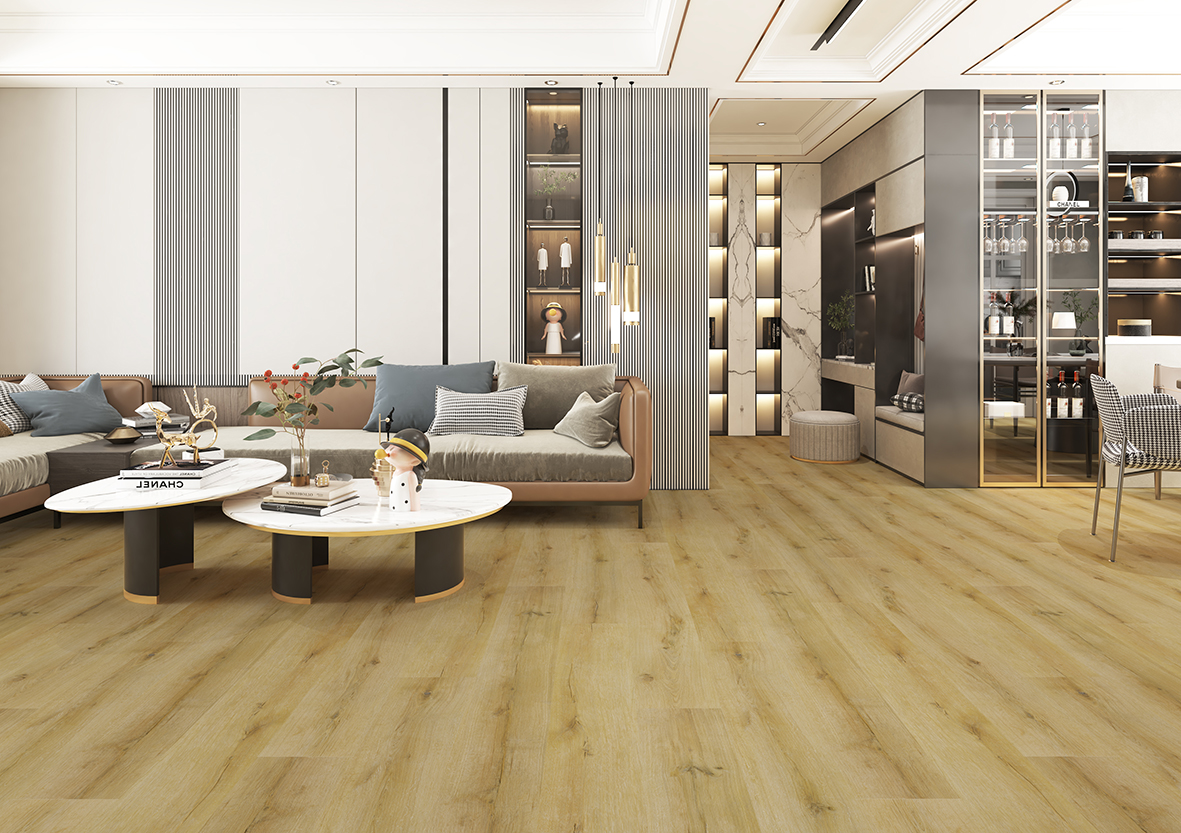
The specs that move the price
Most of an SPC floor's cost is built into the plank itself, before anyone talks logistics. The heavy hitters:
- Wear layer: a thicker, higher-AC wear layer costs more to produce and is the single biggest driver of both price and longevity.
- Overall thickness and backing: more core material and an attached acoustic layer add mass and cost.
- Surface treatment: embossed-in-register texture and multiple UV coatings raise realism and durability, and the price with them.
- Click system: a licensed, engineered locking profile costs more than a generic one, and tends to install and hold better.
- Design complexity: multi-colour prints, wider planks, and larger formats can carry a premium over basic looks.
What each factor tends to add
| Cost factor | Why it costs more | What you gain |
|---|---|---|
| Thicker wear layer | More raw material, tighter tolerance | Longer life, better scratch resistance |
| EIR texture | Extra tooling and register alignment | A more convincing wood look |
| Licensed click | Royalty and engineering | Reliable, tight joints |
| Certifications | Testing and audits | Verified safety and quality |
| Custom colour or size | Setup and shorter runs | A floor tailored to the project |
Costs beyond the plank
The board is only part of the number. These push the delivered cost up or down:
- Certifications and testing: FloorScore, ISO systems, and CE conformity involve ongoing audits that reputable suppliers build into their pricing.
- Order type: standard stock designs usually cost less per unit than custom colours, sizes, or private-label runs.
- Freight and duties: weight, distance, and import tariffs matter, since SPC is dense and heavy to ship.
- Underlay and accessories: trims, thresholds, and any separate underlay add to the project total.
- Installation: even fast floating installs carry labour, and subfloor prep can add cost if levelling is needed.
Where cheap gets expensive
A low headline price often hides a cut somewhere. Common shortcuts that cost you later:
- A thin wear layer that scratches and dulls within a few years.
- A weak UV coating that fades in sunny rooms.
- A generic click system that gaps or fails at the seams.
- Missing or unverifiable certifications, which can matter for indoor air quality and for commercial specs.
None of these show up on the first day. All of them show up in the replacement bill.
How to compare quotes fairly
Line up the specs before the prices. Ask each supplier for the wear-layer figure, the AC rating, the surface treatment, the click system, and the certifications, then compare like with like. For custom or wholesale orders, pricing, minimums, and lead times are set per project, so confirm those directly rather than assuming. When two quotes finally match on specification, the remaining price difference is the one actually worth negotiating.

Match the spec to the use, not to the top of the range
The most common way to overspend is buying performance the room will never use. A guest bedroom does not need the wear rating of a hotel lobby, and a ground-floor shop does not need the thickest acoustic build made for upstairs apartments. Work backwards from the space: traffic level, moisture exposure, acoustic requirements, and whether the subfloor needs a more forgiving plank. A supplier who asks about your rooms before quoting is trying to fit the spec; one who only quotes their premium line is trying to fit their margin.
The installation stage has its own cost drivers
The plank price is only part of the installed price. Subfloor levelling is the quiet budget item: a wavy screed must be corrected for any floating floor, and that labour can rival the flooring itself in bad cases. Room shape matters too; corridors, angles and many doorways raise cutting waste and fitting time compared with open rectangular space. Herringbone and other pattern layouts consume more material and more labour than straight planks. None of this shows on a supplier quote, so budget for it separately rather than being surprised by it.
How a factory actually builds a quote
From the manufacturing side, a quote is mostly raw material, and the core compound dominates: the ratio of virgin PVC to filler, the stabiliser package, the quality of the decor film and the wear layer sourced. Then come conversion costs such as energy for extrusion and UV curing, licensed technology such as the Unilin click, certification upkeep, and packing. A quote that undercuts the market sharply has usually removed something from that list, and it is rarely the packaging. Understanding this makes lowball offers easier to read: the discount is being paid for somewhere inside the plank.
Timing, consolidation and the cost you control
Buyers control more of the final cost than they think. Consolidating orders into full containers uses the freight you are already paying, since shipping a half-empty box costs nearly the same as a full one. Planning orders ahead of your season avoids paying for urgency, and freight markets themselves swing, so the same container can cost meaningfully different amounts across the year. Bundling accessories such as underlay-ready planks, trims and skirting into the same shipment beats sourcing them locally at retail later.
Purchase price versus the decade after
The cheapest floor on day one is often the most expensive by the time it is replaced. A thin wear layer means visible traffic lanes years earlier; a weak core means click failures that no maintenance can fix; missing certifications can block a commercial project entirely after the goods have landed. A well-specified SPC floor is largely maintenance-free, so almost the entire lifetime cost is the purchase itself. Spending slightly more once, on the parts of the spec that age well, is usually the cheapest decision available.
Talk to MILAT Floor
Samples, specifications, OEM & private label, wholesale or export — our team is ready.