
Buyers ask this a lot, and it deserves a straight answer. SPC (stone plastic composite) flooring is a rigid vinyl product, so the honest question is not whether it contains any chemistry but whether it releases anything harmful into the room you live in. The evidence for a well-made, tested floor is reassuring, and the details below explain why.
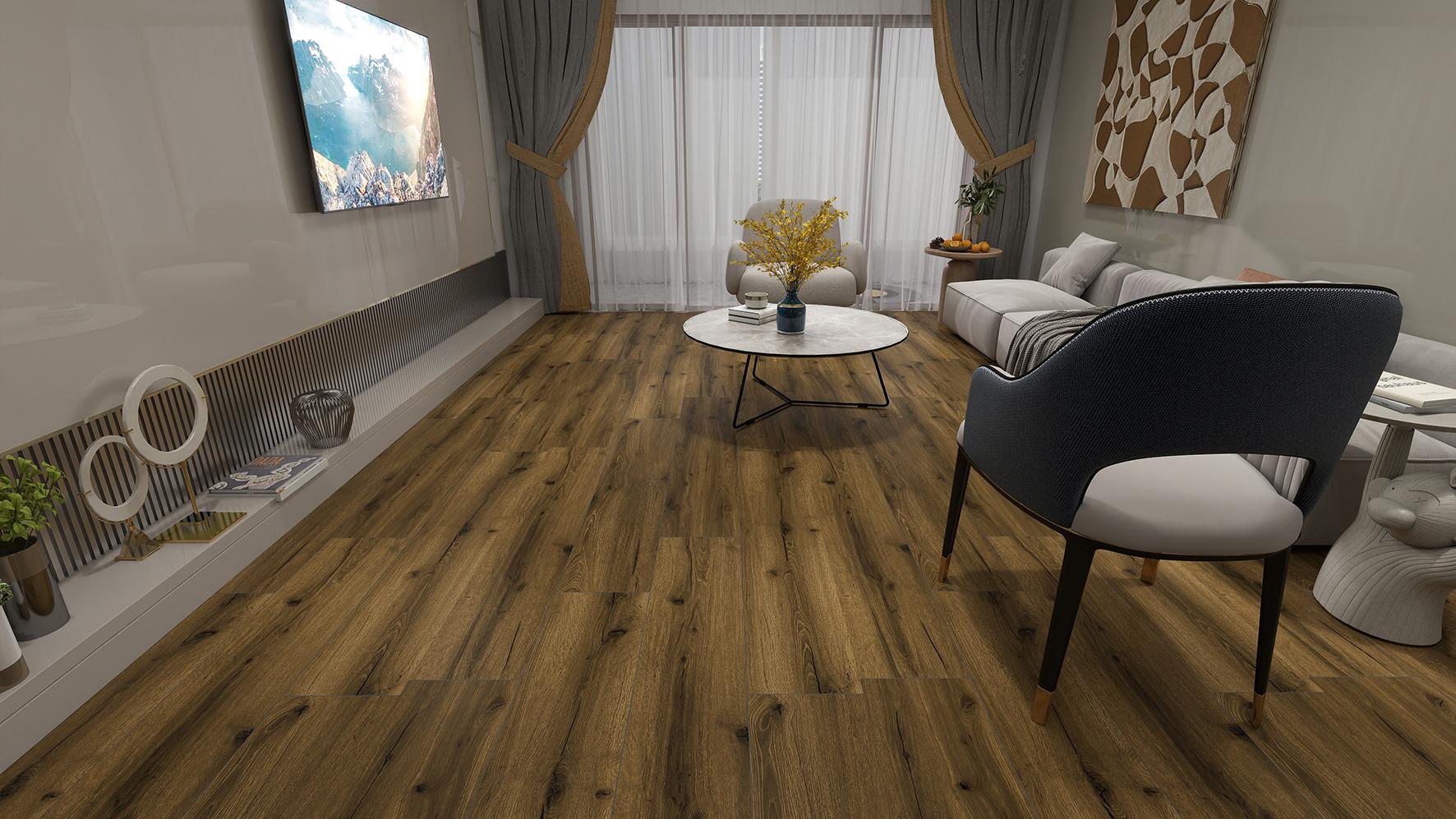
What SPC is made of
An SPC plank is built in layers. The core is a dense mix of limestone powder (calcium carbonate) and PVC, which gives the board its rigidity and its waterproof character. Above that sits a printed decor film, a transparent wear layer, and usually a UV-cured topcoat. Many planks also carry an attached acoustic pad such as IXPE. None of this is exotic, but the material that draws scrutiny is the PVC binder, and specifically two things people worry about: VOC emissions and plasticisers.
MILAT builds its core to be 100% waterproof and finishes the surface with a 2X UV coating over an EIR (embossed-in-register) texture. The construction matters for air quality because emissions come mostly from the binders, inks, and adhesives, not from the limestone.
VOCs and what FloorScore certifies
Volatile organic compounds are the gases a material can off-gas after installation. That new-floor smell is the everyday sign of it. FloorScore is the certification most relevant here: it tests hard-surface flooring against the California Section 01350 (CDPH) emissions criteria, and a passing product stays below strict limits for a long list of individual VOCs, measured in a sealed chamber over time. MILAT flooring is FloorScore certified, which means an independent lab has measured its emissions rather than the factory simply asserting they are low.
FloorScore is not a claim that a product contains zero chemistry. It is a claim that whatever it emits stays under health-based thresholds for indoor use, including schools and offices. That is the distinction most marketing blurs, so it is worth keeping straight.
Phthalates, formaldehyde, and heavy metals
Three legacy concerns come up with any vinyl floor. Older PVC products sometimes used ortho-phthalate plasticisers, added lead or cadmium stabilisers, or urea-formaldehyde binders. Modern SPC made to EU and FloorScore standards moves away from all three. SPC is also rigid rather than flexible, so it needs far less plasticiser than old sheet vinyl in the first place. If a supplier cannot show current test reports for these, treat the silence as an answer.
| Concern | Legacy vinyl | Tested modern SPC |
|---|---|---|
| Formaldehyde | Possible (UF binders) | Not used; FloorScore-limited |
| Ortho-phthalates | Common plasticiser | Phased out in compliant lines |
| Heavy metal stabilisers | Lead/cadmium historically | Ca-Zn stabilisers instead |
| Measured VOC emissions | Often untested | Chamber-tested to CDPH limits |
How to keep indoor air clean during installation
The floor is only one input. Adhesives, subfloor primers, trim caulk, and paint in the same room can emit more than a certified plank does. With a click-lock floating floor you avoid most wet adhesives entirely, which is one quiet advantage of a reversible click system like the licensed Unilin joint MILAT uses.
- Choose a floating click installation to skip solvent-based adhesives where possible
- Ventilate the room for a few days after any new-build finish work
- Ask for the specific FloorScore and CE certificates by product line, not a generic logo
- Let planks acclimatise in the room before laying so the joint seats properly
- Keep the same low-emission standard for underlayment and trim, not just the plank
So, is it safe?
For a tested, certified product installed in a ventilated room, SPC is a low-emission flooring choice, and independent chamber testing is the reason we can say that rather than just hoping it. The caveat is real though: safety travels with the certificate, not the category. An uncertified budget import can be a very different product from a FloorScore-tested one that looks identical on a sample board. Ask for the paperwork.
Certification is not a one-off event
A common misreading of safety certificates is treating them like a diploma: earned once, valid forever. Indoor air quality schemes do not work that way. FloorScore certification involves ongoing surveillance, and a factory that changes its raw materials or slips on process control risks losing it. That ongoing scrutiny is precisely what makes the label useful to you. When MILAT maintains FloorScore alongside ISO 9001 quality management, the practical meaning is that the low-emission product tested yesterday is made the same way as the product shipped to you next season, and an outside party keeps checking.
How to compare air-quality claims between two suppliers
Put two spec sheets side by side and the safety claims can look identical while meaning very different things. A few habits cut through the fog.
- Prefer named certifications with verifiable registries over generic phrases like eco or non-toxic
- Check the certificate covers the specific product line you are buying, not just the company
- Ask which laboratory did the testing and whether it is independent of the factory
- Treat a supplier's refusal or delay in sharing documents as an answer in itself
Underfloor heating and emissions
Warmth accelerates chemistry, so it is fair to ask whether a heated floor changes the safety picture. The honest answer: emission testing for schemes like FloorScore is designed around realistic indoor conditions, and a well-made SPC floor operated within the manufacturer's stated temperature limits for underfloor heating remains a low-emitting product. The cases that go wrong usually involve overdriven heating systems pushed past the flooring's rated surface temperature, which is a stress on the floor's structure as much as anything. Follow the temperature limits in the installation guidance and the air-quality logic holds.
Cleaning products: the safety risk people actually control
After installation, the biggest chemical variable in the room is not the floor; it is what gets mopped onto it. SPC's sealed, UV-coated surface needs nothing aggressive: a neutral pH cleaner and water handle normal household soil. Harsh solvents, bleach-heavy mixes and oil soaps do not make the floor cleaner, but they can dull the finish and they load the room's air with far more volatiles than the flooring ever will. If low indoor emissions are why you chose a certified floor, extend the same logic to the cleaning cupboard. The floor's simplicity is the point: let it be simple.
The hygiene argument nobody puts on the label
Safety is also about what a floor cannot harbour. SPC has no grout lines to trap grime, no carpet pile to hold dust, allergens and whatever comes in on shoes, and no seams that stay damp after mopping in a click floor laid correctly. For households managing allergies, or simply households with a baby at crawling height, a smooth waterproof surface that can be fully cleaned in minutes is a genuine health feature. It never appears on a certificate, but ask any parent who switched from old carpet what changed about the dust in the room.
Talk to MILAT Floor
Samples, specifications, OEM & private label, wholesale or export — our team is ready.