
Two questions come up on almost every flooring enquiry: what is the minimum I can order, and how long until it arrives. The honest answer to both is "it depends," but the things it depends on are knowable. Understanding what actually drives MOQ and lead time lets you plan an order that lands on time and at a sensible cost, instead of being surprised by either. This guide explains the mechanics — the specific figures always come from your supplier for your project.
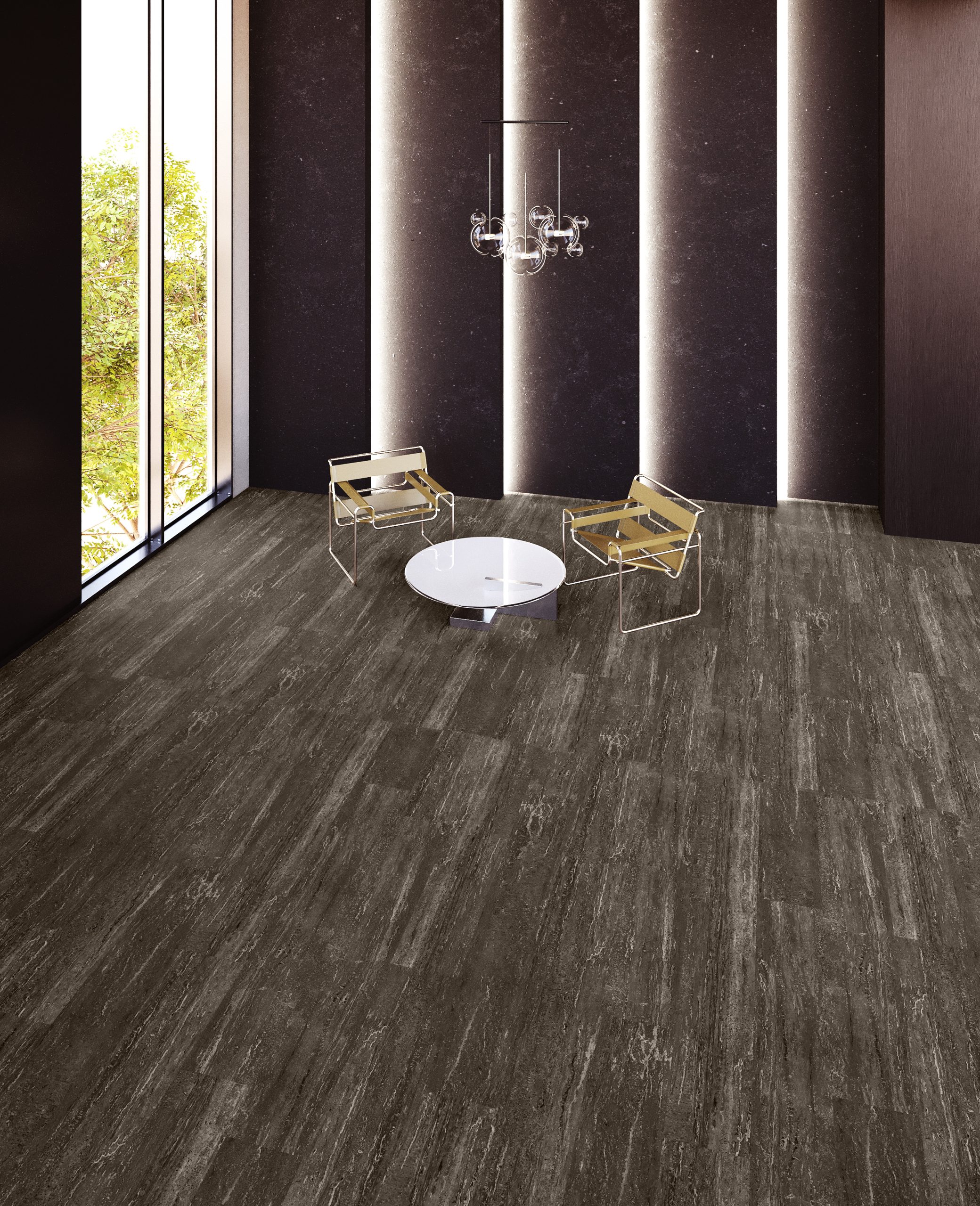
What MOQ actually is
A minimum order quantity is the smallest volume a manufacturer will produce or ship for a given order. It exists because setting up a production run — cleaning lines, loading a colour, running a décor film — carries fixed cost whether you make a little or a lot. Below a certain volume the setup cost per square metre becomes uneconomic for both sides.
What drives the MOQ up or down
- Stock vs custom: an in-range design already in production usually has a lower minimum than a bespoke colour that needs its own run.
- Private label: custom printing, packaging, and branding add setup that a plain in-range order does not.
- Custom sizes or textures: a non-standard plank size or embossing means dedicated tooling time.
- Décor film: a unique wood or stone pattern often has its own film minimum from upstream.
- Shipping mode: full-container orders price and move differently from part-container or groupage.
Stock designs vs custom production
This is the single biggest factor. A design already running in a manufacturer's collection can often ship from existing production with a smaller minimum and a shorter wait. A custom colour, size, or private-label programme has to be scheduled into the line, produced, and packed — which raises both the minimum and the lead time. If speed matters more than exclusivity, an in-range design is almost always faster.
Container economics
| Factor | Effect on your order |
|---|---|
| Full container load (FCL) | Best cost per square metre; you fill the whole box |
| Less than container (LCL) | Smaller volume possible, higher cost per unit |
| Product weight | SPC is dense; weight can cap a container before volume does |
| Destination and route | Freight time and cost vary widely by lane |
Because SPC has a dense limestone core, a container often reaches its weight limit before it runs out of floor space. That is why flooring MOQs are frequently framed around a container load — it is the natural, most economic shipping unit.
What drives lead time
Lead time is production plus logistics. Production depends on whether the design is in stock or needs a run and where it sits in the schedule; logistics depends on freight booking, transit on your lane, and customs at the destination. A stock order pulled from existing production is generally quicker than a custom run that has to be scheduled, made, and packed before it even reaches the port.

How to plan your order
- Confirm early whether your chosen design is in-range or custom — it changes both minimum and timing.
- Order samples first so approval does not delay the production booking.
- Aim for full-container volumes where you can, for the best landed cost.
- Give your supplier the destination and target date up front so they can quote realistic logistics.
- Build a buffer for customs and inland transit at your end.
MILAT confirms minimums and timing per project — they depend on the design, whether it is stock or custom, your specification, and your destination. Share your target volume, chosen designs, and delivery location and MILAT will come back with real figures. Email sales@milatfloor.com or call +90 535 960 79 46 for a quote and samples.
Seasonality: when you order matters
Flooring demand breathes with the construction calendar. Renovation seasons, project completion pushes and pre-holiday rushes all crowd factory schedules and shipping lanes at predictable times of year, and holiday shutdowns in manufacturing countries can pause production entirely. Freight has its own seasons too, with peak shipping periods tightening vessel space. None of this changes the product; all of it changes how long you wait. Buyers who place major orders in quieter windows consistently get smoother scheduling than those who join the annual scramble. Ask your supplier when their calm months are. It is a question few buyers think to ask and every factory can answer instantly.
The real cost of ordering too little
Squeezing the order down to the bare minimum feels prudent and often is not. Run short mid-project and the reorder carries its own shipping, its own wait, and a subtle risk nobody warns you about: a new production batch may differ fractionally in shade from the first, exactly like dye lots in fabric. On a floor, two batches meeting in the middle of a room is visible forever. The craftsman's rule scales up to containers: order the full quantity plus a sensible reserve for cutting waste, mistakes and future repairs, in one batch. The reserve boxes stored in a warehouse are the cheapest insurance in the whole project.
Mixing designs inside one order
Buyers often assume MOQ means one design filling one container. In practice, most manufacturers, MILAT included, can load several designs into a single container, with per-design minimums typically applying for stock decors. This changes your buying strategy completely: instead of betting a whole container on one colour, a distributor can test a spread of wood tones and a stone look in the same shipment and let the market vote. Custom or private-label designs behave differently, since each requires its own production setup, but for stock ranges a mixed container is the standard way smart importers derisk a new market.
From first order to standing programme
The economics of MOQ and lead time transform once you stop treating each order as an isolated event. A distributor who shares a rough annual forecast lets the factory slot production runs ahead of need, hold raw materials for their private-label decors and smooth the peaks. The buyer gets shorter effective waits, because the queue was joined before the stock ran out, and steadier supply through busy seasons. This is the quiet difference between purchasing and partnership: the paperwork looks the same, but a forecasted repeat customer simply lives in a different part of the factory's calendar than a stranger.
Planning backwards from your empty warehouse
The practical skill is reverse scheduling. Start from the date you must have sellable stock, then walk backwards: customs clearance and inland delivery, the sea voyage, the production slot, the deposit and order confirmation, and before all of it, sampling and approval. Add honest buffer at every handoff, because delays stack while savings do not. Write the chain down once with your supplier for your specific route and it becomes a reusable template: every future reorder is then a simple question of counting back from the day your current stock will run out, and placing the order before that line is crossed.
Talk to MILAT Floor
Samples, specifications, OEM & private label, wholesale or export — our team is ready.