
Every floor exposed to strong, direct sun for years will change colour eventually; it's how UV light works on almost any material. The real question is how much, and how fast. Quality SPC is built to resist it far better than most floors, and a few small habits keep fading to something you'll never notice.
How SPC resists fading
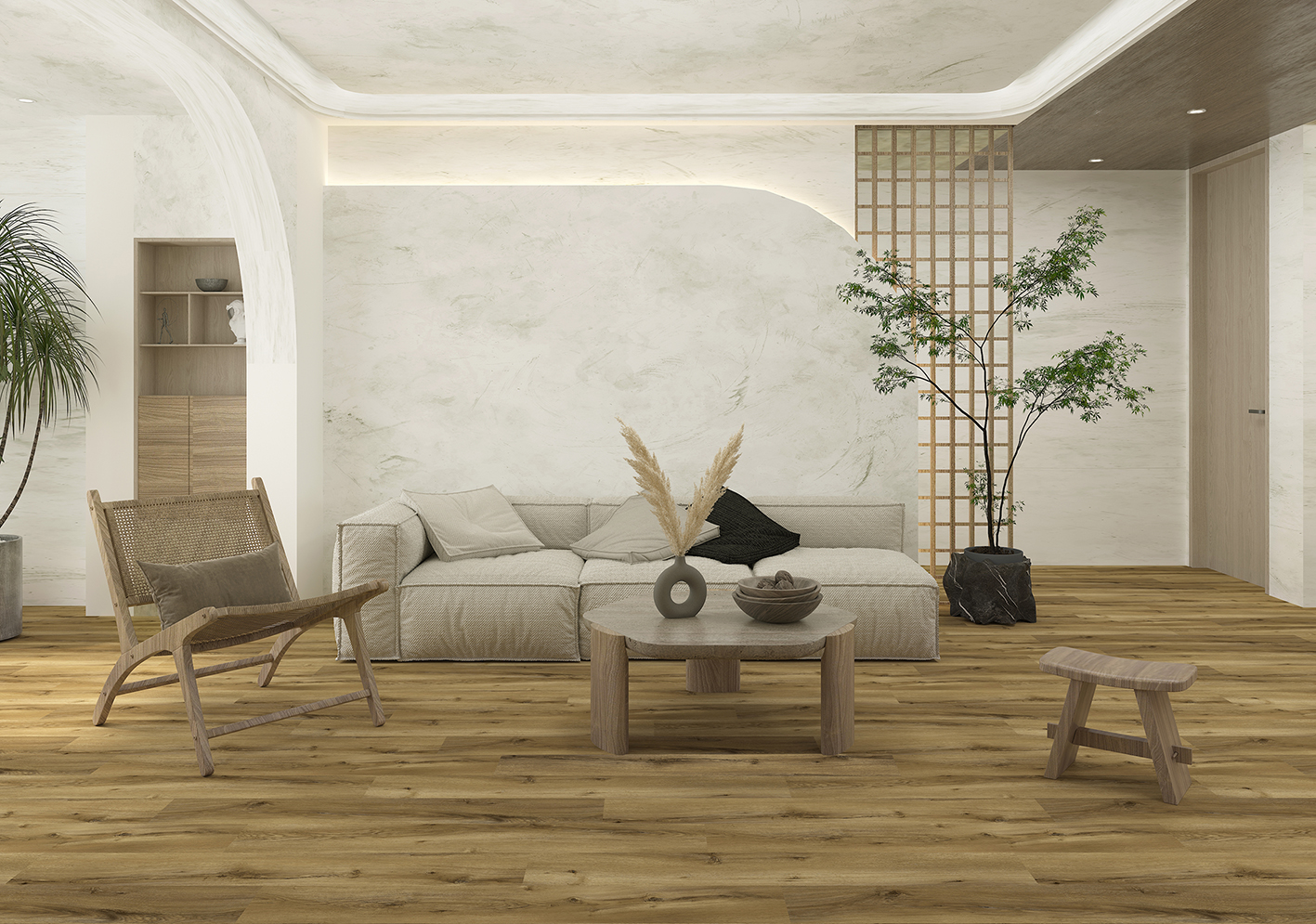
Fading happens when UV rays break down the pigments in the decor layer. SPC is designed to slow that right down. MILAT floors carry a wear layer topped with a 2X UV coating that protects the print against fading, so the colour holds up under daily sun far longer than an untreated surface would. The decor is also printed and sealed under that layer rather than sitting on top, which shields it from the direct hits that dull a painted or stained finish.
Where fading still shows up
No coating makes a floor fully UV-proof. The place it tends to show is a room with big south or west-facing windows that get hours of hard, direct sun, especially a spot half-covered by a rug or furniture. What you notice there isn't really fading so much as a difference: the exposed floor shifts slightly while the covered part stays put, leaving a faint outline when you move the rug. Even lighting across the floor is what keeps it looking consistent.
Simple ways to prevent it
- Fit sheer blinds, curtains, or UV-filtering window film on the sunniest windows.
- Close blinds during the harshest midday hours in summer.
- Rotate rugs and move furniture around occasionally so no single patch is always covered or always exposed.
- Choose lighter or mid-tone decors for very bright rooms, since colour shift is harder to spot on them than on dark, high-contrast planks.
- Add exterior shading, like an awning or planting, where a room bakes in afternoon sun.
What to do if part of the floor has shifted
If a covered area and an exposed area have drifted apart in tone, the fix is light, not chemistry. Leave the whole floor uncovered and let the lighter section catch up over a few weeks of normal daylight; the two usually even out. Going forward, rotating rugs stops it happening again. For a floor that's genuinely faded after many years in brutal sun, the reversible click system means you can replace the worst planks rather than the whole room.
UV and heat are two different problems
Sunlight attacks a floor twice. Ultraviolet light works on pigments over years and causes the slow colour shift everyone pictures. Heat is the faster, less discussed effect: a dark floor behind a big south-facing window can get genuinely hot in the afternoon, and repeated heating and cooling makes any floating floor expand and contract. Fade prevention is about coatings and glazing; heat management is about respecting expansion gaps and, in extreme glass-walled rooms, following the manufacturer's guidance on installation method. Diagnose which problem you actually have before blaming the decor.
How manufacturers test for lightfastness
You cannot wait years to know how a floor ages, so factories compress time. Samples go into weathering chambers where calibrated lamps deliver concentrated UV, and the exposed piece is compared against a shielded reference using standard grey-scale ratings. The point for a buyer is simple: a manufacturer working to European norms can show test-based evidence for colour stability rather than a bare claim. When you evaluate suppliers, ask how the decor and coating system is tested for light exposure; a factory with CE Declarations of Performance and a real lab answers that question without flinching.
Sunny climates, glass buildings, conservatory-style rooms
Geography sets the difficulty level. A living room in northern Europe sees a fraction of the UV dose of a Gulf villa or a Mediterranean penthouse with floor-to-ceiling glazing. In high-exposure settings, stack the protections: modern low-E or filmed glazing takes out much of the UV before it reaches the floor, a 2X UV coated surface resists what remains, and shading during peak hours handles the worst season. Shops with glazed frontages deserve the same thinking, since a display window bakes the same strip of floor every single day.
Choosing decors that age gracefully
Design choice is quiet insurance. Any colour change reads as a difference between exposed and covered zones, so decors that already contain variation hide it best.
- Mid-tone wood decors with natural colour play conceal shift far better than uniform pale or very dark boards
- Pronounced grain and EIR texture break up light and make gradual change harder to perceive
- Random-look installation patterns avoid straight boundaries where a tone difference would show
- In sun-struck rooms, plan rug positions from day one or commit to leaving the floor bare
A realistic expectation to set with customers
Retailers and contractors do well to say it plainly: no floor covering on the market is immune to a decade of direct sun, and any supplier claiming zero change forever is overselling. What a quality SPC floor with a proper UV-resistant coating offers is change slow enough and even enough that nobody notices it happening. Setting that expectation at the point of sale prevents the one genuinely awkward conversation, which is a customer discovering a rug shadow after years and believing the floor failed. It did not fail; the room simply lived.
Talk to MILAT Floor
Samples, specifications, OEM & private label, wholesale or export — our team is ready.