
The Netherlands is both a strong flooring market in its own right and a distribution gateway for the wider Benelux and Europe, anchored by the port of Rotterdam. Dutch buyers expect tight EU compliance, reliable logistics and clean documentation. This guide covers how to source SPC for the Dutch market and how MILAT supplies it from Türkiye.
The Rotterdam advantage
Rotterdam is Europe's largest seaport and one of the most efficient places on the continent to land, clear and distribute a container. For importers and distributors, routing SPC through the Netherlands puts stock within easy reach of the Benelux, Germany and France.
EU compliance, documented
Flooring sold in the Netherlands must meet EU construction-product rules. MILAT ships with CE Declarations of Performance under Regulation (EU) No 305/2011, FloorScore indoor air quality certification and ISO management systems — the paperwork Dutch buyers and specifiers expect.
A product suited to Dutch homes and projects
A 100% waterproof rigid core suits Dutch kitchens and bathrooms, an attached IXPE layer keeps apartments quiet underfoot, and realistic Embossed In Register wood looks fit the clean, natural interiors the market favours. Wear ratings up to AC5 cover homes through to commercial projects.
Wholesale and private label from Türkiye
MILAT supplies Dutch and Benelux distributors, retailers and contractors at container scale, with OEM and private-label production for brands building their own range. Türkiye's proximity keeps shipping shorter than East Asian origins, and terms are confirmed per order.
Sources & references

A design-led market with clear taste
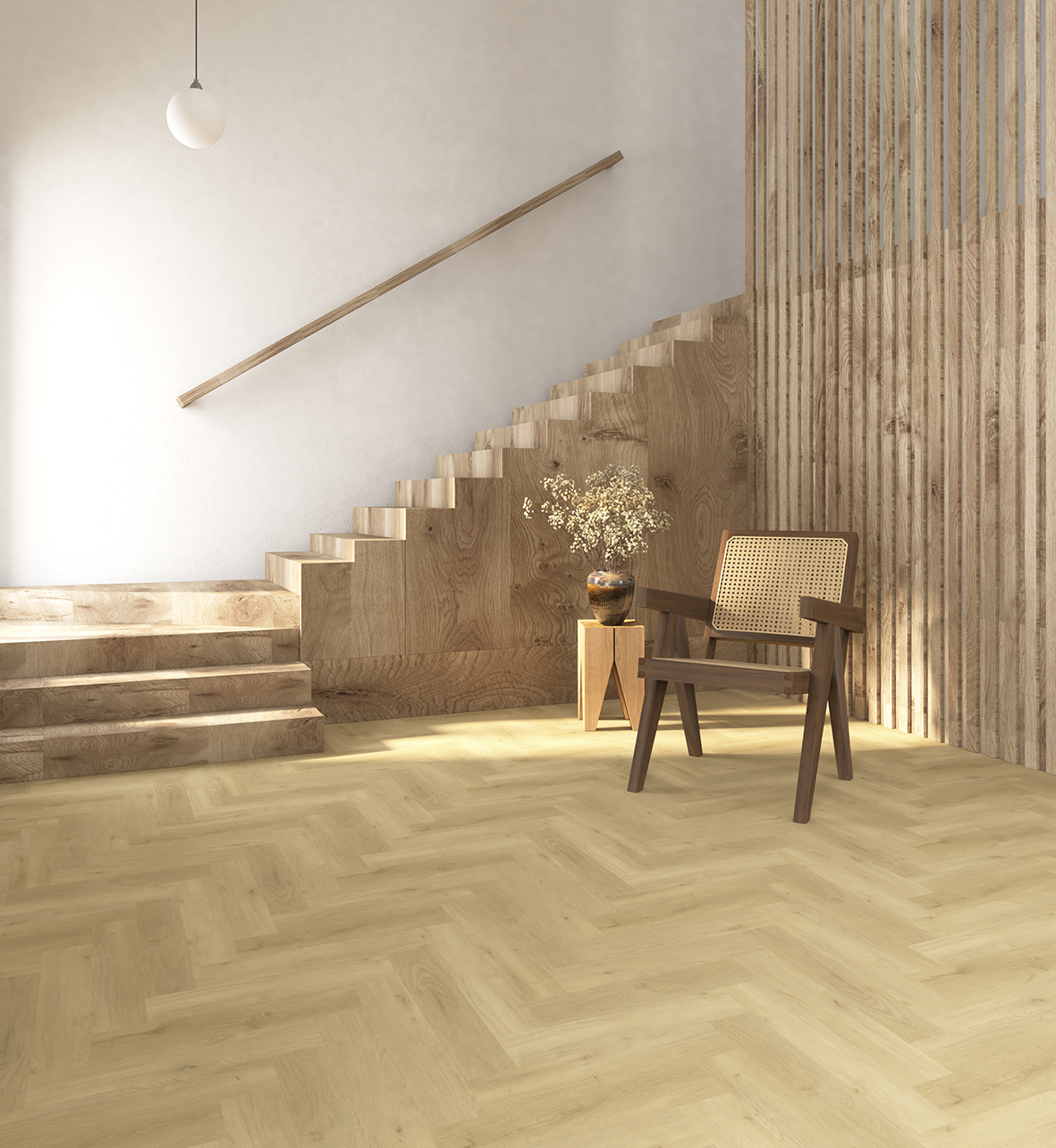
Dutch interiors have a recognisable accent: light, matt, calm. Pale and greige oaks dominate, warm naturals follow, and high-gloss or heavily rustic looks stay niche. Herringbone has moved from Amsterdam canal-house restorations into mainstream new-builds, and buyers expect realistic texture rather than shiny print. For an importer this clarity is a gift, because a Dutch range can be tight and confident: a handful of pale and greige decors with EIR texture covers most of the demand. MILAT's collections were drawn with exactly this north-European palette in the frame, which shortens the range-building conversation considerably.
Water is a national theme, indoors too
A country substantially below sea level has a practical relationship with moisture. Ground floors over damp crawl spaces, canal-side buildings with humid lower storeys, and a general climate of wet bicycles in the hallway all argue for a floor that treats water as normal weather rather than an emergency. A 100% waterproof SPC core fits that reality, but the Dutch lesson applies everywhere: pair it with proper subfloor moisture checks and ventilation of crawl spaces, because the floor surviving the moisture is not the same as the building doing so. Dutch installers are notably disciplined about this, and it shows in how their floors age.
Apartments, noise rules and the acoustic layer
The Netherlands is dense, apartment living is standard, and Dutch owners' associations commonly impose strict impact-noise requirements on hard flooring, with contour lines written into building rules. A hard floor without acoustic provision can be simply forbidden. This makes an attached acoustic layer a commercial requirement rather than a comfort feature: MILAT's IXPE backing, with sound absorption up to 21 dB, gives Dutch retailers and fitters a documented starting point for those conversations, sometimes combined with an additional acoustic underlay where an association demands more. Importers who lead with acoustic documentation close apartment-sector sales their competitors lose at the first VvE meeting.
From Dutch warehouse to the wider region
Few Dutch flooring importers sell only to the Netherlands. A warehouse near Rotterdam or Tilburg naturally serves Belgium and western Germany within a day's trucking, which turns a national buyer into a regional distributor almost by geography alone. That ambition needs a manufacturer who can keep pace: consistent batches across repeat containers, CE Declarations of Performance that work across every EU market, multilingual labelling on request, and private-label programmes that let one importer run distinct brands per channel or country. This is precisely the partnership model MILAT builds from Gaziantep, with the Turkish origin keeping the sea leg to Rotterdam short by intercontinental standards.
Two channels, two different sales
The Dutch market splits cleanly between retail and project business, and they buy differently. Retail runs through flooring specialists and large home-improvement chains, where sampling, display quality and a recognisable range decide the sale. The project channel, from housing corporations renovating estates to developers fitting out new apartment blocks, buys on documentation and consistency: CE Declarations of Performance, FloorScore for indoor air, acoustic evidence for the owners' associations, and the certainty that the floor delivered in phase three matches phase one. An importer set up to feed both channels from one warehouse, with one specification, extracts far more from each container than a single-channel operation can.
Talk to MILAT Floor
Samples, specifications, OEM & private label, wholesale or export — our team is ready.