
A spec sheet is where a flooring decision is won or lost. Architects, contractors and procurement teams do not buy a photo of a plank; they buy a core type, a wear rating, a click mechanism and a stack of certificates that prove the product does what the sales page says. This guide walks through the specifications that matter for MILAT SPC flooring, what each figure means on site, and which numbers are confirmed per order rather than fixed across a catalogue.
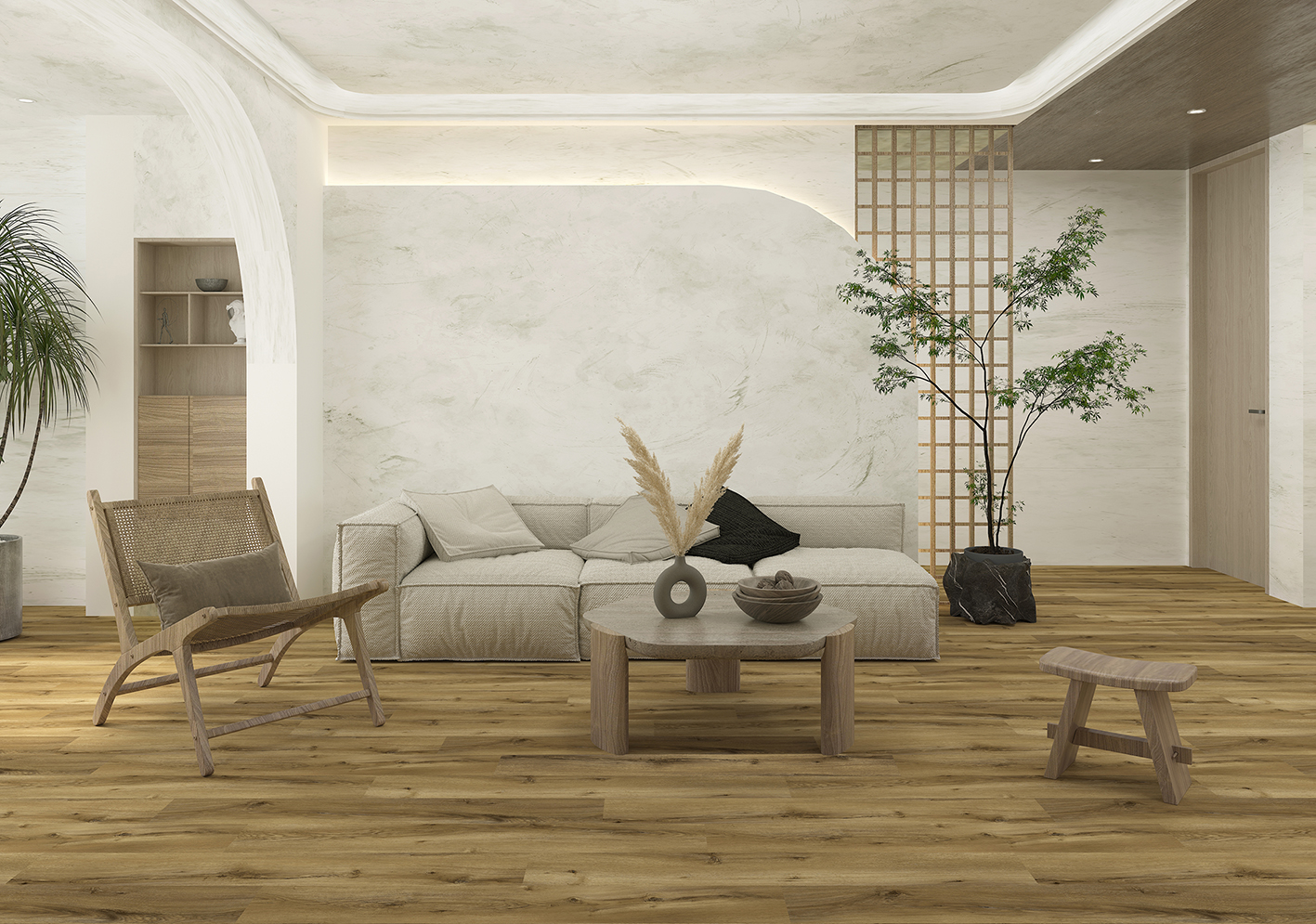
How to read an SPC spec sheet
SPC stands for stone plastic composite: a rigid core of limestone powder blended with PVC and stabilisers. Because the core carries no wood or foam, it stays dimensionally stable and is fully waterproof through its thickness, not just on the surface. When you compare two SPC products, five things separate them: core density and layer count, the wear rating of the top surface, the click system, the acoustic underlay, and the certifications behind the environmental and fire claims. Thickness, wear-layer microns and weight per square metre also matter, but those often vary by collection and by order, so they belong on the product spec sheet rather than a marketing page.
MILAT SPC at a glance
| Property | Detail |
|---|---|
| Core | 100% waterproof SPC (limestone + PVC), stable through the full thickness |
| Construction | 6-layer build |
| Surface texture | EIR — Embossed In Register, grain aligned to the printed design |
| Maximum wear rating | AC5 (Triollo EIR collection), rated for heavy commercial traffic |
| Click system | Licensed Unilin — tool-free, reversible, up to 60% faster than glue-down |
| Acoustic underlay | IXPE, up to 21 dB impact-sound reduction |
| Surface coating | 2X UV cured layer |
| Plank widths | 177.8 mm and 228.6 mm |
| Plank lengths | 1219.2 mm and 1524 mm |
| Tile format (Cava) | 457.2 x 914.4 mm |
| Collections / designs | Exclusive, Perfecta, Triollo EIR — 54 designs |
| Overall thickness | Confirmed on the product spec sheet per collection / order |
| Wear-layer thickness | Per spec sheet (industry wear layers commonly run 0.3-0.7 mm) |
| Weight per m2 | Confirmed on the product spec sheet / per order |
| Certifications | FloorScore, ISO 9001/10002/14001/27001/45001, CE (EU 305/2011), SHI Product Passport |
Core, surface and coating
The 6-layer construction is what turns a printed film into a floor that survives a decade of foot traffic. Below the design film sits the SPC core for rigidity; above it sit the transparent wear layer, the UV coating and the embossed texture. MILAT uses an EIR surface, so the emboss follows the grain of the printed plank rather than sitting as a generic repeating pattern — run a hand across a knot and the texture is under your fingers. The 2X UV coating hardens the top surface against scuffing and everyday cleaning chemicals.
- Wear rating up to AC5 on the Triollo EIR range — the class used for shops, offices and other heavy commercial floors.
- EIR texture registered to the visual, for realistic wood and stone looks.
- Waterproof core, so spills and humidity do not cause swelling from within.
- Wear-layer microns are the single biggest driver of surface life — always confirm the figure for the exact SKU you are quoting.
Click system and formats
MILAT SPC uses a licensed Unilin click profile. It installs floating with no adhesive, goes down markedly faster than a glued floor, and can be lifted and relaid if a board is damaged or a room is reconfigured. With two plank widths, two plank lengths and a large-format Cava tile, a specifier can mix formats across a scheme while keeping a single supplier and a single click standard.
Certifications that back the claims
- FloorScore — indoor air-quality and low-VOC certification for the finished product.
- ISO 9001, 10002, 14001, 27001 and 45001 — quality, complaint handling, environmental, information-security and occupational-safety management.
- CE marking under EU Construction Products Regulation 305/2011 for the European market.
- SHI Product Passport for supply-chain and material transparency.
Need a stamped spec sheet for a specific collection, including confirmed thickness, wear-layer and weight for your order? Email sales@milatfloor.com or call +90 535 960 79 46 and we will send the technical data for the exact SKUs you are pricing.
Matching the spec to the project, not the brochure
A specification is only right relative to a use case. A guest bedroom does not need what a hotel lobby needs, and paying for the difference everywhere is as much a specification error as under-speccing the lobby. The working method is to zone the project: classify each area by traffic intensity, water exposure, acoustic sensitivity, and load, then let each zone pull the spec it requires. Where a single product must cover everything, spec to the hardest zone. Procurement teams that write the use case into the tender get comparable quotes; those that copy a brochure get sold to.
Dimensional stability: the quiet number that matters
Somewhere on a serious spec sheet sits a figure for dimensional stability after heat exposure, and it deserves more attention than it gets. It describes how much a plank changes size when temperature cycles, which in real life translates to whether joints stay tight through summers, glazed sun traps, and underfloor heating seasons. SPC's limestone-rich core is the reason this number is strong compared with flexible vinyl, but recipes differ between factories. When comparing two products that look identical, this line, together with the wear rating, is where the real difference usually hides.
Nominal versus measured: reading rival spec sheets
Two sheets can print the same headline and describe different floors. Watch the classic traps: total thickness quoted with the attached pad on one sheet and without it on another; wear layer stated in different units to look thicker at a glance; a click system named vaguely rather than as a disclosed licence; acoustic performance quoted from a different build-up than the one being sold. The cure is standardising the comparison yourself, one table, same units, every claim tied to a test standard and certificate. A factory confident in its numbers, as we are, will happily fill in your table rather than insist on its own.
Writing the tender clause
Architects and quantity surveyors do not specify photographs; they specify verifiable properties. A tender clause that protects the project names the core type, minimum wear rating, licensed click requirement, attached acoustic layer with its performance, surface treatment, and the certificates that must accompany delivery, with CE Declarations of Performance under EU 305/2011 and FloorScore for indoor air quality as documentary requirements rather than marketing claims. Written this way, any bidder can compete but none can substitute downward unnoticed. Manufacturers see the difference immediately: loose clauses attract loose offers.
| Clause element | What to require |
|---|---|
| Core | Rigid SPC, stone plastic composite |
| Wear rating | Stated class, up to AC5 for hard-use areas |
| Click system | Licensed system, licence disclosed, e.g. Unilin |
| Acoustics | Attached IXPE layer, impact sound absorption up to 21 dB |
| Compliance | CE DoP per EU 305/2011, FloorScore certificate with delivery |
Talk to MILAT Floor
Samples, specifications, OEM & private label, wholesale or export — our team is ready.