
Ask a manufacturer how long SPC lasts and you will hear a warranty number. Ask an installer and you will hear it depends. Both are right. A quality SPC floor can serve a couple of decades or more at home, but the real lifespan is decided by things you control long after the box is opened.
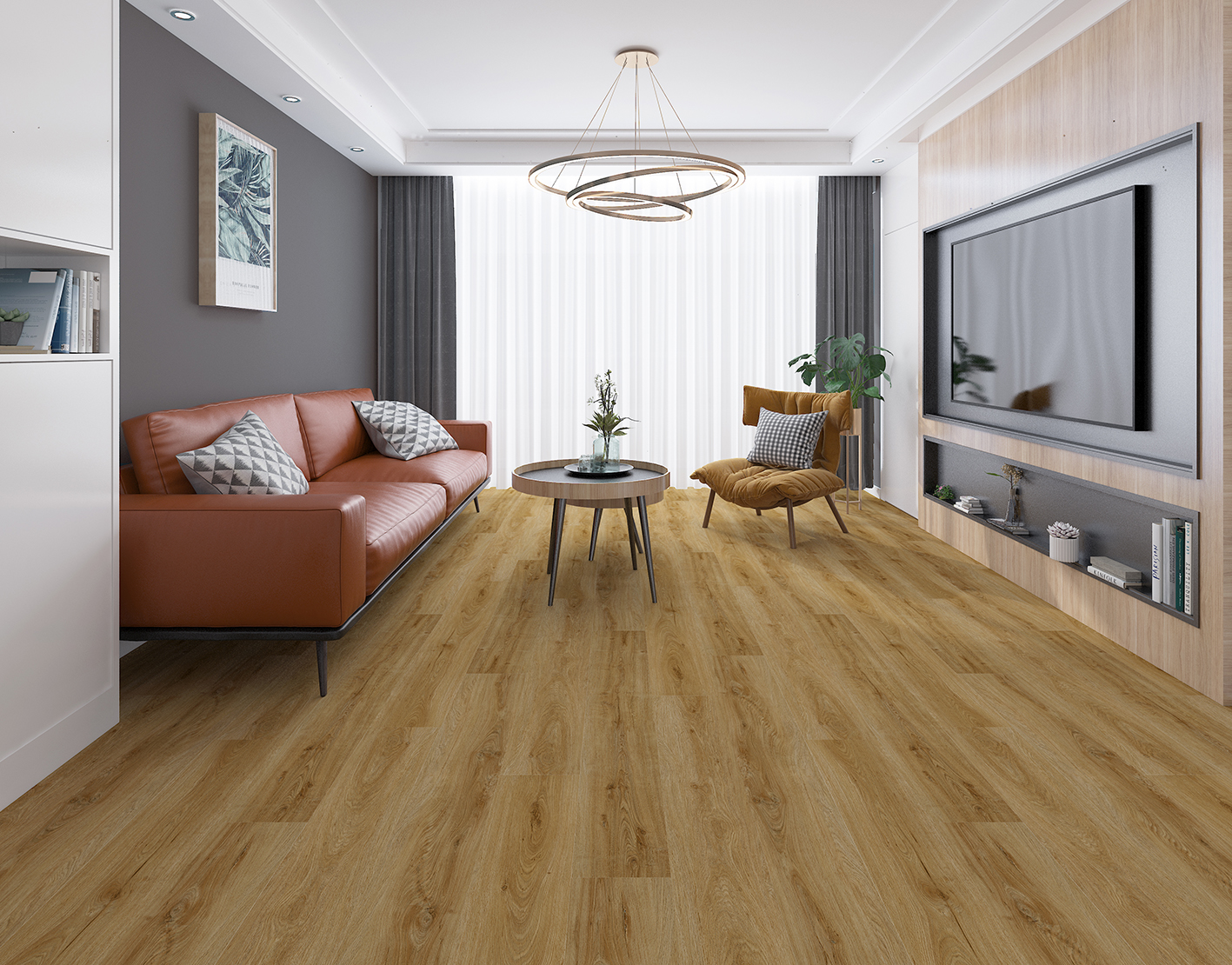
The short answer, and the honest one
In a typical household, well-made SPC flooring commonly lasts on the order of 15 to 25 years, and often longer in low-traffic rooms. The core itself is extremely durable; it is the wear layer and the surface finish that age first. Warranty lengths are a signal of confidence, not a guarantee of exact service life, so treat them as one data point rather than a promise.
What actually wears out
SPC does not rot or swell the way wood can. Instead, three things determine how it ages:
- The wear layer: this clear top layer takes the abrasion. A thicker, higher AC-rated wear layer resists scratches and traffic longer, which is why commercial-grade planks outlast budget ones.
- The surface finish: a UV-cured coating, sometimes doubled up, protects colour and sheen from sunlight and cleaning. Weak coatings dull and fade sooner.
- The joints: the click connection has to stay tight. Poor subfloor prep or a floor forced into place stresses the locks, and failed seams end a floor's life faster than surface wear.
How setting changes lifespan
| Setting | Typical demand | What shortens it |
|---|---|---|
| Bedrooms, low traffic | Light | Sunlight fade, furniture dents |
| Living areas, kitchens | Moderate | Grit, spills left to sit, pet claws |
| Hallways, entries | Heavy | Tracked-in grit, rolling loads |
| Retail, offices | Very heavy | Constant traffic, undersized wear layer |
How to get the most years out of it
Most SPC floors that fail early were let down by prep or care, not the product. A few habits move the needle:
- Level and clean the subfloor before install; a flat base keeps joints from working loose.
- Put walk-off mats at entries. Grit is abrasive, and stopping it at the door protects the wear layer more than anything else.
- Fit felt pads under furniture and load cups under heavy point loads.
- Damp mop with a neutral cleaner; skip steam, wax, and abrasive pads that attack the finish.
- Manage strong direct sun with blinds or UV film if the room bakes all afternoon.
When lasting long is not the whole story
A floor can stay structurally sound and still get replaced because tastes change or a scratch pattern shows in a busy hallway. That is worth planning for: choose a design and plank format you will still like in ten years, and keep a few spare planks from the original batch. Because SPC installs as a floating, reversible floor, swapping a damaged board is far easier than repairing glued-down or nailed alternatives, which stretches the practical life of the whole installation.
Lifespan is decided in the factory before it is decided in your home
Two SPC floors can look identical on day one and age completely differently, because the ingredients that govern longevity are invisible at a glance. Core density and the ratio of mineral to polymer decide whether joints stay tight under years of load. The wear layer's quality, not just its thickness on paper, decides how traffic marks it. The UV coating decides whether the surface dulls in five years of sunlight or shrugs it off. This is why MILAT builds with a dense stone-polymer core, wear ratings up to AC5, and a 2X UV coat — the parts of lifespan a buyer cannot inspect are the parts a manufacturer must not cut.
The click joint is the floor's weakest link — or its strongest
Ask an installer what fails first on a cheap rigid floor and the answer is rarely the surface; it is the joint. Copied locking profiles with sloppy tolerances loosen with foot traffic, seasonal movement and furniture loads, and once joints gap, dirt and moisture work in and the decline accelerates. A licensed Unilin click, milled to the licensor's tolerances, is engineered for the floor's whole service life, including being taken apart and relaid. If you want a two-decade floor, joint pedigree matters as much as wear layer.
How to spot a floor nearing the end
SPC rarely fails suddenly; it retires gradually. The signs are consistent: traffic lanes going dull while edges stay glossy, print showing through at pivot points such as in front of the sink, joints that catch a sock or hold a dirt line, and corners that click when stepped on because the lock beneath has fatigued. One or two symptoms in one room can be handled with plank replacement. Symptoms across the whole floor mean the wear layer has done its work and replacement is the honest answer.
Rental years are longer than owner years
A landlord and a homeowner should read lifespan claims differently. Owner-occupied floors get mats, felt pads and prompt cleaning; rental floors get furniture dragged on move-out day and spills discovered at inspection. The same product simply serves fewer years in a hard-use rental, which is an argument for buying up the specification, not down — a stronger wear rating costs a little more once and saves a full replacement cycle across a tenancy portfolio. Waterproofness earns its keep here too, since unreported leaks are a rental classic.
Plan for year ten on day one
The cheapest longevity decision is made at purchase: keep spare material. Decors are retired, batches vary slightly, and the plank you need in a decade may not exist in the market. A couple of unopened boxes from your original batch, stored flat and dry, turn future damage from a whole-floor problem into an afternoon repair. Note the decor name, batch number and purchase details somewhere you will find them; your future self will not remember.
Talk to MILAT Floor
Samples, specifications, OEM & private label, wholesale or export — our team is ready.