
An origin label is a shorthand. "Made in Türkiye" on a box of SPC does not, by itself, prove anything, but for buyers who know the market it points to a specific set of expectations: EU-oriented compliance, established quality systems, and a shipping map that favours Europe and MENA. The label is only as good as the documents behind it, so this guide is about what to expect and what to ask for so the origin signal actually means something for your order.
What the origin actually signals
Turkey's flooring industry grew up selling into Europe, so serious manufacturers build to the documentation European buyers demand. In practice that means CE marking under the Construction Products Regulation (EU 305/2011) as a baseline for market access, plus independent product certifications for air quality and performance. It also means quality management embedded in the factory rather than bolted on for a single order. None of this is automatic with a Turkish address, which is why you verify it, but the market norm points that way.
The shipping-map advantage
Origin is partly a geography statement. Turkey is closer to Europe, the Middle East and North Africa than East Asia, so for those destinations "made in Türkiye" usually translates to shorter transit and quicker replenishment. China is still the world's largest SPC producer and will win on some cost comparisons; the Turkish case is about landed cost and lead time for buyers whose markets sit around the Mediterranean and Europe.
Documents that back the label
- CE declaration of performance under EU 305/2011 for EU resale.
- FloorScore certification for indoor air quality.
- ISO quality, environmental, and management-system certifications.
- Wear rating (AC5 for heavy commercial) and acoustic dB test data.
- A product passport or traceability record where required.
| Origin claim | Proof to request |
|---|---|
| EU-compliant | CE declaration of performance |
| Low-emission | Current FloorScore certificate |
| Quality-managed | ISO 9001 and related certifications |
| Durable | AC5 wear rating, acoustic test data |
| Traceable | Product passport / batch records |
How MILAT Floor embodies it
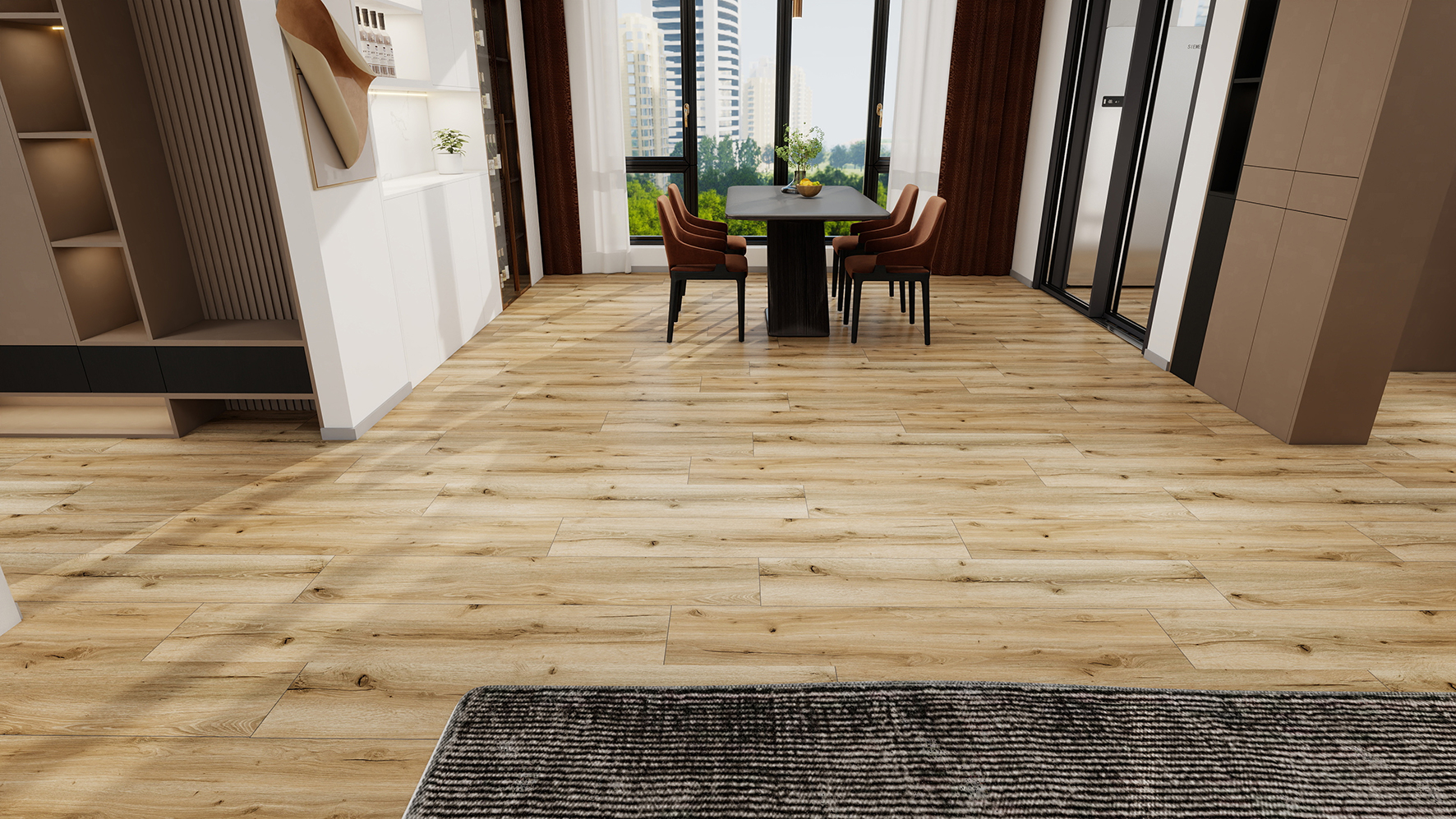
MILAT Floor is a Gaziantep manufacturer. Its products carry the documentation that gives "made in Türkiye" its weight: FloorScore, ISO 9001/10002/14001/27001/45001, CE under EU 305/2011, and an SHI Product Passport. The floors themselves are 100% waterproof SPC with an EIR surface, AC5 maximum wear, licensed Unilin click, IXPE acoustic up to 21 dB, and a 2X UV coating. MILAT offers OEM and private label, wholesale, and custom colours and sizes for worldwide export across 3 collections and 54 designs. That is the difference between an origin label and an origin label you can stand behind.
For certificates and product data on a specific line, email sales@milatfloor.com or call +90 535 960 79 46.
The industrial base behind the label
Origin labels mean more when there is an industry underneath them. Türkiye's flooring sector did not appear from nothing; it grew out of decades of heavy manufacturing in textiles, carpets and construction materials, industries that taught Turkish factories large-scale production discipline and export logistics long before SPC existed. MILAT Floor is a direct example: it is a dedicated SPC and LVT flooring manufacturer, so the SPC lines in Gaziantep inherit the systems, purchasing power and management culture of an established industrial group rather than starting as a standalone venture. When you evaluate a Made in Türkiye supplier, ask what stands behind the factory; the answer separates industrial producers from assemblers.
What an organised industrial zone tells you
Turkish manufacturing clusters in organised industrial zones, and the address is informative. A factory in a zone like Başpınar OSB in Gaziantep operates with planned utilities, formal employment structures and environmental oversight, alongside neighbours in related supply chains. For a buyer, that context lowers several risks at once: power and logistics infrastructure are institutional rather than improvised, and the factory is visible to regulators and its industrial community. It also makes verification easy, since an OSB address can be confirmed, visited and audited in a way a vague trading address cannot.
How to verify an origin claim yourself
Origin fraud exists in every commodity, so verify rather than trust. The checks are quick and layered.
- Ask for the certificate of origin issued for your shipment and confirm it names the manufacturer, not just a trader
- Match the factory address on certificates, CE Declarations of Performance and commercial documents; they should agree
- Request production photos or a live video tour showing your order on the line
- Cross-check the company against Turkish trade registries and its industrial zone listing
- Visit if the volumes justify it; a genuine manufacturer will host you
A supplier who welcomes all five checks has effectively proven the label before you spend anything on flights.
The customs and market-access angle for EU buyers
For European importers, Turkish origin carries a structural advantage: Türkiye's customs union arrangement with the EU means industrial goods move into the single market without the tariff exposure that attaches to many other origins. Combined with short truck and short-sea routes, the paperwork and duty picture is simply calmer than intercontinental sourcing. This is not a loophole; it is the designed relationship between neighbouring markets, and it is one reason EU distributors treat Turkish flooring as a domestic-adjacent supply source rather than a distant import. Confirm the specifics for your product codes with your customs broker, and ask the supplier for the documents your broker names.
Using origin in your own marketing
For private-label buyers, origin is a story you can sell. Made in Türkiye supports a positioning built on European standards, licensed technology and nearby manufacturing, which resonates with customers grown sceptical of anonymous supply chains. The honest version of that story is documented: CE Declarations of Performance, FloorScore, ISO management certificates and a named factory you have visited. Retailers who put the factory relationship into their brand narrative, some even showing the production in their showroom media, convert origin from a line on the carton into a reason customers choose their brand over the identical-looking board next to it.
Talk to MILAT Floor
Samples, specifications, OEM & private label, wholesale or export — our team is ready.